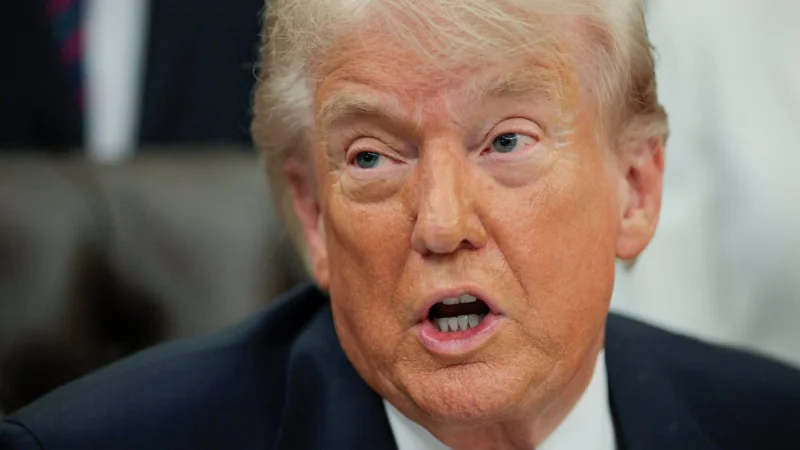
President Donald Trump’s approval rating has fallen to its lowest point of his term as war in Iran and rising prices at home weigh on voters. A recent YouGov poll found inflation and prices were the top concern across age, gender, race and education groups, while 60% opposed the war in Iran and 60% disapproved of Trump’s handling of it.
The polling snapshot, taken May 8, 2026 at 3 p.m., put Trump at 40.5% approval and 56.3% disapproval in RealClearPolling’s average, down from the 50.5% approval and 44.3% disapproval he held when he took office in January 2025. That puts him below his 42.8% first-term average approval and even below Joe Biden’s 43.2% overall approval rating.
Americans are not just sour on Trump. They are sour on the country’s direction. The YouGov poll found 61% said the nation was off on the wrong track, and inflation and prices outranked jobs and the economy, with healthcare and taxes and government spending also near the top of the list. In the generic congressional poll, 38% said they would vote for a Democratic candidate, 34% backed Republicans and 27% were still unsure or said they would not vote at all.


That sentiment has been building for months. Trump’s numbers began slipping during the October 2025 government shutdown and a run-up in gas prices, then dropped further last week as the war in Iran sharpened concerns about both foreign policy and household costs. Civiqs last updated Trump’s net approval in Pennsylvania to -12% on May 6, with 54% of residents there disapproving and 41% approving.
The breakdowns show how broad the drag has become. Postgraduate respondents had a 69% disapproval rate, college graduates 57% and non-college graduates 49%. More than half of women, or 60%, disapprove of Trump’s performance, while men lean slightly favorable at 48% approving and 46% disapproving. Voters ages 18 to 34 were 66% disapproving, those 35 to 49 were 57% disapproving, and even Trump’s strongest age group, voters 50 to 64, split 51% approving.
Party identity still defines the numbers, but not enough to erase the warning signs. Democrats were 97% disapproving, independents 55% disapproving and Republicans 86% approving. Trump’s approval rating has trended downward since he returned to office, and the latest figures leave Republicans heading into the 2026 midterms with a president whose standing is weaker than his own first-term average and weaker than Biden’s overall mark.
With control of Congress hanging in the balance, the political problem is plain: voters are telling pollsters they care most about prices, they dislike the war in Iran and they are turning against the president at the same time. Unless those numbers shift, Trump’s economic policies poll is reading like a warning for the Republican majority already in office.