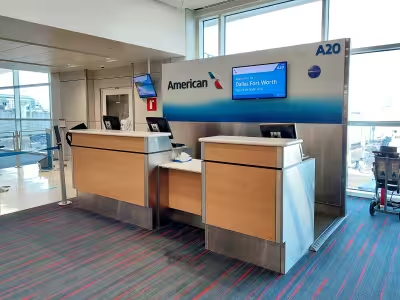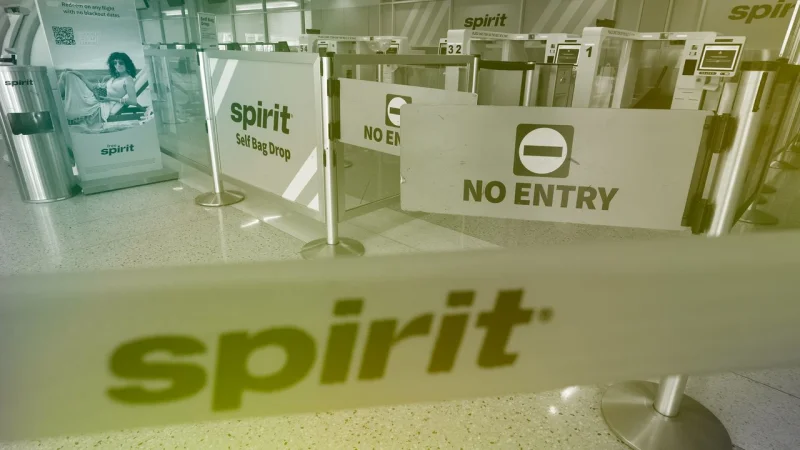
Spirit Airlines shut down on May 2 after the collapse of a federal rescue effort, leaving its flights canceled and its future as an airline ended in an instant. At LaGuardia’s Marine Air Terminal, the departures and arrivals screens went dark for Spirit service, with flights to Fort Lauderdale, Chicago, Miami, Dallas-Fort Worth, Houston, Myrtle Beach and Detroit all marked canceled.
The shutdown hit a terminal with a long memory. Spirit had moved into the Marine Air Terminal in 2021, a building opened in 1940 and designed by William Delano, after decades in which the Art Deco space had served Pan Am’s transcontinental seaplane fleet and later Delta’s shuttle service. The sight of a budget carrier collapsing inside a terminal built for an earlier age gave the day a hard, almost theatrical finality.


The airline had not turned a profit since before the COVID-19 pandemic, and it filed for bankruptcy protection twice in 2024-25 as it tried to shrink, restructure and return to profit in 2027. That plan could not survive the latest blow: between the end of February and early April, the price of jet fuel rose by more than ninety per cent, squeezing an already heavily indebted company that had been fighting to stay afloat.
The rescue effort that might have delayed the ending fell apart last month, after Trump floated the idea of federal government support for Spirit. But the broader market reality was brutal. Steven Rattner, the former Treasury official and investor, said, “Let Spirit liquidate and add its tombstone to the airline graveyard,” and bigger carriers had little reason to mourn the loss of an ultralow-cost rival. United, in particular, had an urgent financial interest in seeing the back of a cheap competitor.
For passengers, the damage was immediate and visible, written right across the Marine Air Terminal’s arrivals screen. For the airline, the collapse was not a surprise so much as the point where debt, fuel costs and failed restructuring finally caught up. Spirit is gone, and the industry that watched it stumble now has one fewer fare fighter to worry about.