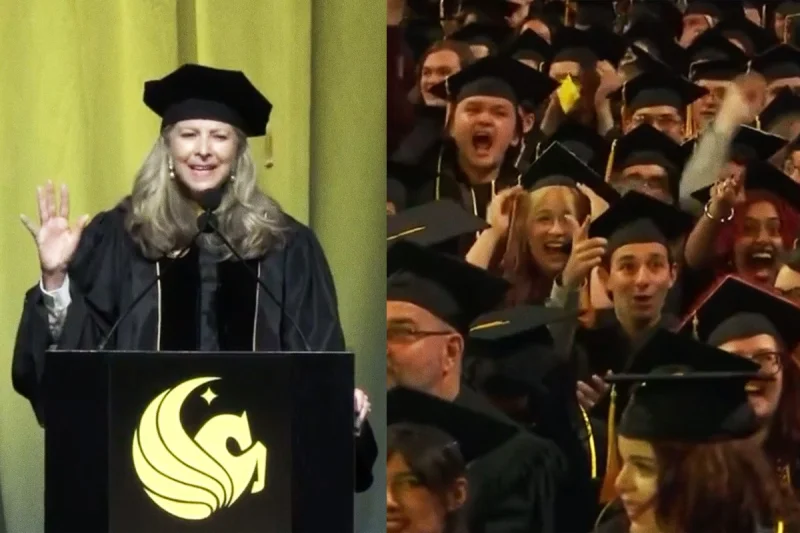
University of Central Florida graduates booed and jeered this year as commencement speaker Gloria Caulfield told them the rise of artificial intelligence is the next Industrial Revolution. Caulfield, the vice president of strategic alliances for Tavistock Development Company, stepped away from the podium as the noise spread through the arena and asked, “What happened?”
She tried to push through the interruption, saying she must have “struck a chord.” Earlier in the speech, Caulfield told the crowd that “we are living in a time of profound change” and that “change is exciting, very exciting,” though she also described it as “daunting.”
The moment turned when she said that “only a few years ago, AI was not a factor in our lives,” a line that drew cheers from students. But when she added that “now, AI capabilities are in the palm of our hands,” the booing started again. A two-minute clip of the speech quickly went viral, turning a graduation address into a flashpoint over how young Americans see the technology reshaping the job market.
That reaction fits a wider unease among graduates who are watching employers automate entry-level work while still being told AI will power the future. In March, a survey found Americans were more likely to approve of Immigration and Customs Enforcement than AI, and a recent Gallup poll said 48 percent of Zoomers believe the risks AI poses to the workforce outweigh its benefits. Anti-AI sentiment appears especially strong among young people, the same audience most likely to feel the first effects in hiring and career paths.
Caulfield did not leave the stage angry. When she later reacted with “Passion!” and said, “I love it,” she sounded less rattled than startled by the scale of the response. The answer to the question raised by the headline is straightforward: the crowd was not rejecting the ceremony, but the message, and the message landed exactly where concern about AI is deepest.