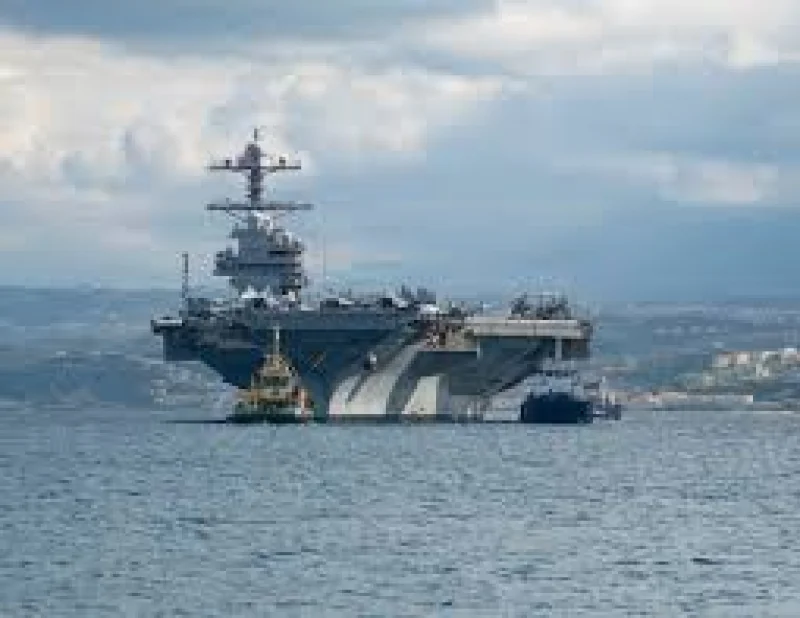
The aircraft carrier USS Gerald R. Ford is on its way home after a deployment that will last more than 330 days by the time it is slated to pull into port in Norfolk, Va., at the end of this month. That stretch is reopening a debate inside the Navy over whether the service’s old rhythm of training, deployment and maintenance still fits the missions being handed to it.
Master Chief Petty Officer of the Navy John Perryman said this month that the service needs a different force generation model and that its current approach was largely built around a peacetime mindset. He described the system as a conveyor belt that is very prescriptive and said the Navy can do better at generating the readiness the department is going to consume. His comments came at a forum hosted by the Military Officers Association of America and land as the Ford heads for Norfolk after months at sea.
The scale of the deployment matters because it cuts against the Navy’s historic pattern of five- to seven-month pumps and carrier strike groups that move through training, deployment and maintenance on three-year centers. In late April, the Navy marked a first in more than two decades when three aircraft carriers were operating simultaneously in the waters surrounding the Middle East, a sign of how far demand has stretched the fleet. Older force generation models are now being tested by back-to-back operational demands in Venezuela, Iran and around South and Central America.
The question is no longer theoretical. Then-Chief of Naval Operations Adm. Michael Gilday defended the Navy’s deployment structure in 2020, saying the service had made and was projecting into the future the commitments needed to meet every directed deployment. But late April also brought a separate sign that senior leaders are reconsidering the old playbook: Adm. Daryl Caudle suggested moving amphibious ships from a 36-month deployment cycle to a 50- or 52-month cycle that would include two deployments, arguing that the Navy could reduce overhead and gain some efficiency by getting two deployments out of the same training and maintenance phase.
For the Ford, the immediate reality is simple: it is still steaming home after a long deployment, and it will not be back in Norfolk until the month ends. For the Navy, the larger answer is already taking shape. The service is moving toward a force generation model built less around peacetime assumptions and more around a fleet that is being asked to stay in motion for longer, more often and with less room to reset.