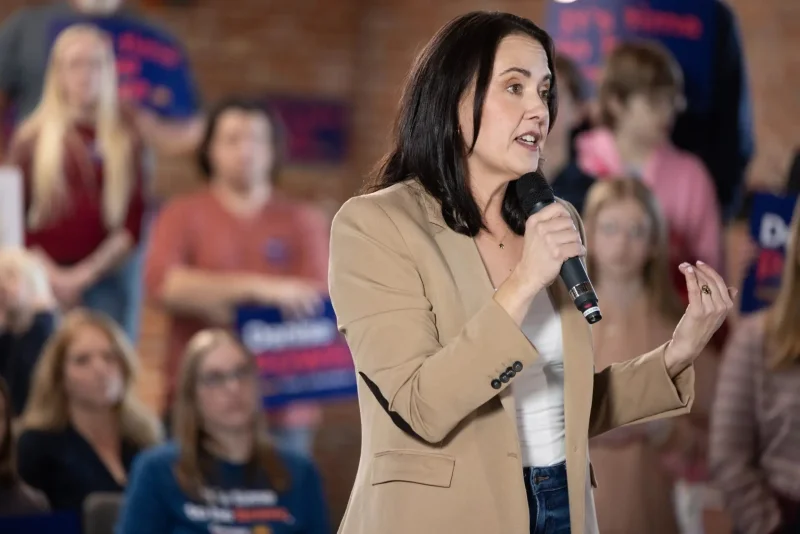
Outside spending in Nebraska's Second Congressional District has climbed past $3.5 million, with the bulk of the money aimed at boosting Denise Powell and attacking state Sen. John Cavanaugh in the Omaha-area race. Independent expenditures totaling $3.265 million have gone to that effort, while Cavanaugh has received only a small $272,000 ad buy from the Congressional Progressive Caucus PAC.
The latest wave arrived as ads from Pro-Choice Majority 2026 began running the week of the May 12 Democratic primary, splitting roughly $242,000 between support for Powell and opposition to Cavanaugh. The district has become a flash point for outside money in a contest Democrats now view as winnable after five-term Republican Don Bacon said he would retire, and the fight has pulled in groups with sharply different views on abortion and Israel.
That Israel dispute helped trigger one of the race's strangest turns. Democratic Majority for Israel canceled its spending in the district last week after Powell repeatedly said she would not accept money from any PAC involved in the issue of Israel. DMFI had planned to run ads under its own name starting April 27, but the buy was pulled after Powell's comments surfaced. A small cable station still aired $659 worth of DMFI spots by mistake before the campaign was moved to New Democrat Majority PAC.

Internal documents at local television stations captured the scramble in a line that read, 'Cancel spending for DMFI PAC and moving money to New Democratic Majority.' A DMFI spokeswoman, Rachel Rosen, said the PAC had not transferred any money to any organization related to NE-02 or to any outside organization at all this cycle. An adviser to Pro-Choice Majority 2026 described the group as a 'sister PAC,' underscoring how closely related organizations have tried to shape the race without always appearing on the same nameplate.
For Nebraska Democrats, the spending surge is a sign that the seat around Omaha is now central to the party's path back in the House. The final week before the primary was already crowded with outside ads, and the money now circling the district has made the contest less about one local campaign than about which faction can claim the field first.