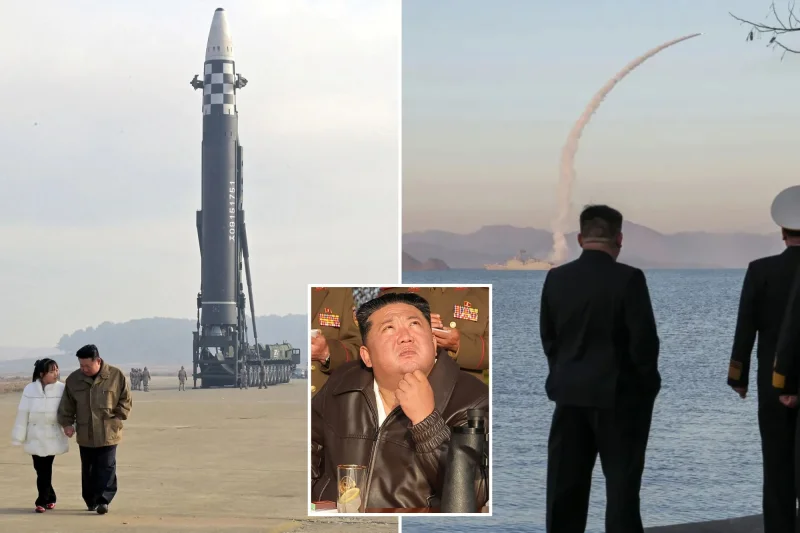
North Korea has updated its constitution to require a retaliatory nuclear strike if Kim Jong Un is assassinated, according to a report. The revision was approved at a session of the Supreme People’s Assembly that opened March 22 in Pyongyang.
South Korea’s National Intelligence Service briefed senior government officials this week on the change, which lays out procedures for retaliation if North Korea’s leadership is incapacitated or killed. The revised provision says that if the command-and-control system over the state’s nuclear forces is placed in danger by hostile forces’ attacks, a nuclear strike shall be launched automatically and immediately.

The move follows a broader pattern in which Pyongyang has tightened the language around its nuclear posture and its relationship with the South. previously reported that North Korea revised its constitution to define its territory as bordering South Korea and remove references to reunification, a change described as the first time the country included a territorial clause in its constitution.
The latest update also comes after Kim last month pledged to further strengthen North Korea’s nuclear capabilities while keeping up a hard-line stance toward South Korea. He has called South Korea the most hostile enemy and accused the United States of state terrorism and aggression. The report links the constitutional change to heightened global tensions after the killing of Iran’s Supreme Leader Ali Khamenei and other officials during a recent conflict.
The timing matters because it shows North Korea is not only talking about nuclear deterrence in the abstract. It is writing a direct retaliation rule into the state’s highest law, signaling that any strike aimed at the leadership would be treated as an immediate trigger for nuclear use. For Seoul and Washington, that makes any future crisis around Kim Jong Un more dangerous, and far less ambiguous, than before.