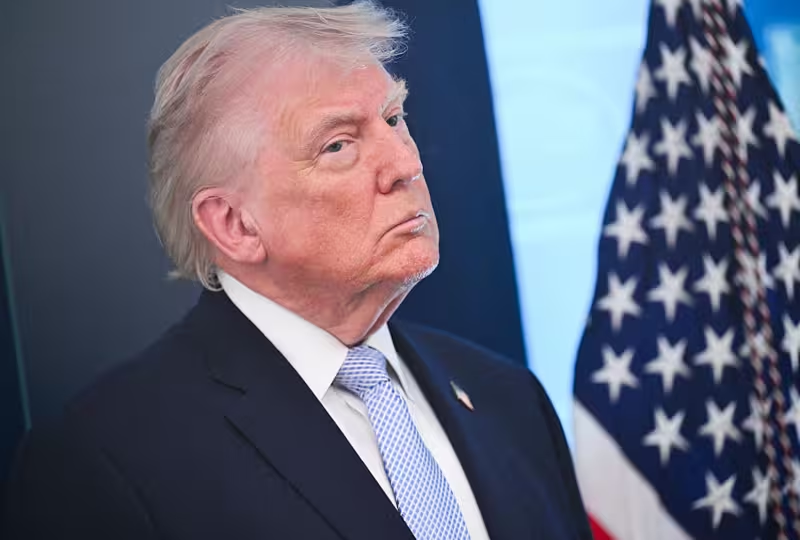
Donald Trump’s weak standing with voters is beginning to reach far beyond Washington. A Ipsos survey in late March found the president at 36% approval, and Democrats are already using that slump to push into state legislative races they hope can shift the Future of power in November.
That matters because the terrain down ballot is suddenly wide open. Democrats are expected to regain control of the House in the midterms, and there are hopes the Senate could be for the taking as well, but the more immediate fight is in state capitals, where control can move faster and shape redistricting, voting rules and policy for years. The Democratic Legislative Campaign Committee has named seven battleground states — Alaska, Arizona, Minnesota, Wisconsin, Michigan, Pennsylvania and New Hampshire — and says it is working toward contests in 11 additional states.
The pressure on Republicans is not theoretical. The Economist’s polling average has Trump below any point during his first term and below Joe Biden’s lowest rating, and that sour mood is feeding talk inside the party about what happens in November. Last week, Texas Lt. Gov. Dan Patrick said Republicans would have a tough time keeping control of the Texas House, where they have held power for more than two decades and now lead 88 to 62. The warning is striking because Texas is not usually treated as a battleground for legislative control.



Democrats are also trying to translate national dissatisfaction into local gains after years of losses. Between 2008 and 2014, the party lost nearly 1,000 state legislative seats, a retreat that helped Republicans entrench themselves in more states and at more levels of government. The Democratic Legislative Campaign Committee says it has already flipped some 30 state legislative seats since Trump won re-election in 2024, while Republicans have not flipped any state legislative seats in that span. That is not yet a wave, but it is enough to suggest the map is changing under both parties’ feet.
Peverill Squire said the basic political weather is improving for Democrats. “Things are lining up well for the Democrats’ chances at the state level in November,” he said. He added that if voters keep souring on the Trump administration, “it will, of course, hurt the Republican party’s prospects down the ballot.”
The catch is that national mood does not always translate neatly into statehouse results. Squire said Republicans in several states have pushed hard on conservative policies on abortion, education, taxes and other issues that may cost them independents and suburban voters. But he also said the same partisanship that is hurting Republicans may limit how far Democrats can run up the score, because polarization makes it harder to win over voters outside each party’s hardest core. “It is not clear that they will be able to mobilize voters beyond their hardcore base, which is always a concern in a midterm election,” he said.
That is the real Future problem for Republicans: Trump’s approval rating is low enough to put every level of the ballot under strain, but geography and polarization may keep the damage from becoming total. Democrats have the opening, and in November they will find out whether it is wide enough to matter in enough states to change who writes the rules next.