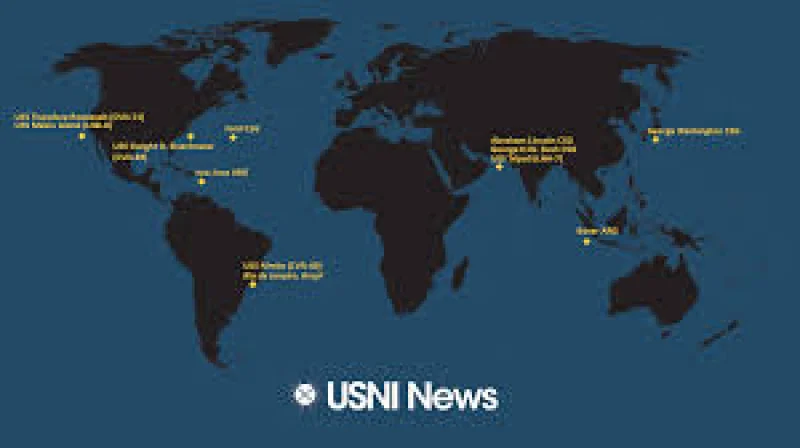
The Naval Update Map on May 7, 2026, showed the approximate current locations of U.S. Carrier Strike Groups and Amphibious Ready Groups. The weekly update, based on available open-source information, did not include classified or operationally sensitive details.
The map matters because it puts a moving picture to two of the Navy’s most powerful formations. A carrier strike group is built around an aircraft carrier and carries significant offensive strike capability. An amphibious ready group is centered on three amphibious warfare ships and has a Marine Expeditionary Unit embarked.

The source behind the map describes both formations as keys to U.S. dominance over the world’s oceans, and the weekly format is meant to show where those forces are without exposing anything sensitive. That makes the update less a tally of warships than a snapshot of where American sea power is being projected at the moment.
The tension is what is not there: no classified coordinates, no tasking details, no operational orders. What remains is enough to show the reach of a carrier strike group and the structure of an amphibious ready group, but not enough to tell an adversary what they would do next. That is the point of an open-source map that still aims to be useful.
For readers trying to understand the significance of the May 7 update, the answer is straightforward. It showed that U.S. naval power remained forward-placed and visible, and it did so in a way that revealed posture without revealing the playbook.