Sudan’s war is being measured now not just in deaths and displacement, but in how long its commanders say they are willing to keep it going. Rapid Support Forces commander Mohamed Hamdan Dagalo said his fighters were prepared to continue until 2040 if needed, and days later army chief Abdel Fattah al-Burhan vowed to fight until Sudan was cleansed of the RSF, estimating the war could last until 2033.
Those declarations land in a country already shattered by the conflict that began in April 2023. A joint report by the United Nations Development Programme and the Institute for Security Studies said more than 150,000 people have been killed, nearly 15 million have been displaced, up to 24 million face food shortages and at least 19 million lack safe drinking water and sanitation.
The report said Sudan’s state institutions are on the verge of total collapse, with governance paralysed, healthcare and education systems shattered, markets destroyed and production in agriculture, manufacturing and services severely weakened. It projected that if the war drags on until 2030, Sudan’s GDP in 2043 would be US$34.5 billion lower than it would be without war, GDP per capita would fall by about $1,700, and more than 60 percent of the population would be living in extreme poverty.
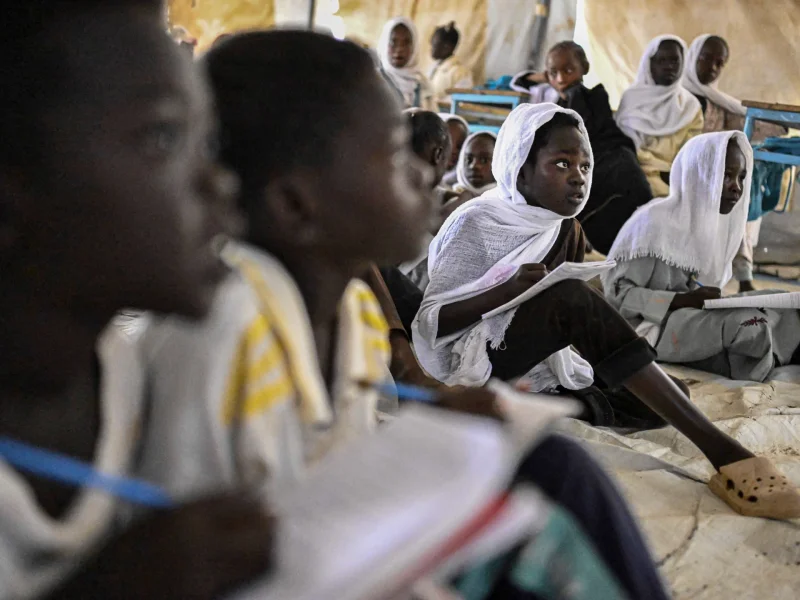
Luca Renda, one of the report’s authors, said a conflict lasting to 2030 would push an additional 34 million people into extreme poverty, calling it “the economics of suffering.” He said the longer the war continues, the greater the misery, and warned that a $1,700 fall in income is the difference between being a family that can eat and one that cannot, between being a child who goes to school and one who goes to work.
The human cost is already visible across Sudan’s health system. Since the war began, an estimated 70 to 80 percent of health facilities in conflict zones have become non-functional because of targeted attacks and looting, and at least 145 verified attacks on healthcare facilities and personnel have been documented. About 65 percent of the population lacks adequate access to medical care, and in Khartoum only one in four hospitals remains operational.
That is the contradiction at the center of the war: the commanders speak in terms of years, while the country is already running out of functioning institutions, food, water and care. More than 61,000 deaths were estimated between April 2023 and June 2024 alone, infant mortality is projected to worsen dramatically, and Sudan is forecast to become one of the worst-performing low-income countries in Africa by 2043 if the fighting does not stop.