Justice Sonia Sotomayor said Tuesday that a fellow Supreme Court justice failed to understand the real-world toll of an emergency order that let immigration enforcement sweeps resume in Los Angeles last year, arguing that even brief detentions can punish people who live paycheck to paycheck.
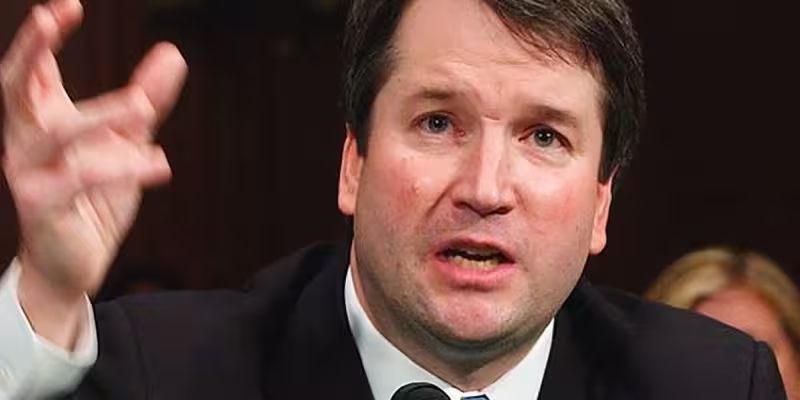
Speaking at a University of Kansas School of Law event in Lawrence, Kansas, Sotomayor pressed her criticism of Justice Brett Kavanaugh’s view of the case, saying he described the stops as “temporary” encounters when, in her view, they can rip through a worker’s day and leave a family without wages. “I had a colleague in that case who wrote, you know, these are only temporary stops,” she said. Kavanaugh wrote that such encounters are typically brief and that people affected promptly go free.
The Sept. 8 emergency order paused lower court rulings that had temporarily barred immigration agents from targeting people based solely on their language, occupation, race or presence at places such as car washes or bus stops. Immigration lawyers have said Kavanaugh’s description is at odds with clients’ accounts of being tackled or detained by federal officers, and progressives have nicknamed such encounters “Kavanaugh stops.”


Sotomayor said the economic hit can be immediate. “Those hours that they took you away, nobody’s paying that person,” she said. “And that makes a difference between a meal for him and his kids that night and maybe just cold supper.” She said Kavanaugh’s background showed in the way he wrote about the case. “This is from a man whose parents were professionals. And probably doesn’t really know any person who works by the hour,” she said.
The dispute traces back to Sotomayor’s September dissent in the immigration stops case, where she said Kavanaugh’s concurrence reduced the interests of U.S. citizens and people with legal status to a single sentence. She said Tuesday that she was not writing out of personal offense. “I was not talking as a Latino justice,” she said. “I was talking about a justice who respects precedent. And I was explaining why that precedent is being violated.”
Sotomayor, who was elevated to the Supreme Court by President Barack Obama in 2009, also pointed to the broader role she believes life experience plays in judging. “Life experiences teach you to think more broadly and to see things others may not,” she said. “And when I have a moment where I can express that on behalf of people who have no other voice, then I’m being given a very rare privilege.” She added that she will be writing a new children’s book titled “Just Try.”
The fight over the order is now a test of how far the court is willing to let immigration agents go while the larger case moves ahead. Sotomayor’s rebuke leaves little doubt about where she thinks the law and the lived reality part company: in her view, the stops are not just brief interruptions, but moments that can cost workers a day’s pay, a family meal and the protection of precedent at the same time.