Donald Trump said Wednesday could bring a very different daily life for more than 90 million Iranians if Tehran did not reopen the Strait of Hormuz before his 8pm US Eastern Time deadline expired. He said Iran’s electricity, bridges and other critical infrastructure would be bombed if it failed to open the vital waterway.
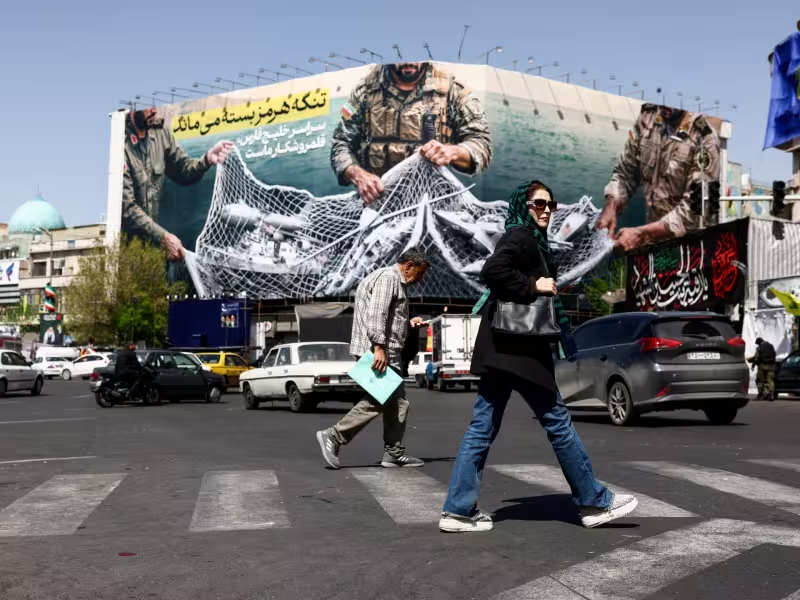
The warning sharpened the sense in Iran that the war was moving toward its most punishing phase, and it was civilians who were bracing first. One resident of Tehran said he had been smoking more and not sleeping well over the past few nights because of the threat of attacks.
People across Iran have been charging phones, laptops and power banks, and buying bread and flour in case blackouts cut off daily routines. Some have been filling water drums and buying bottled water because water pumps would stop if the power went out, even as bottled water has risen sharply in price since the start of the war and electrical devices, especially generators, have become much more expensive over the past weeks.
Read Also: Donald Trump Spurs Dow Jones Industrial Average 0.3% Gain Ahead

In the northern province of Gilan, one resident bought a 25-litre electricity generator to keep a water pump and a few essentials running for a hotel-apartment his family operates. He said it helped ease some concern, but added that he had spent virtually everything the family earned over the Nowruz holidays to get it.
Milad Alavi said Karaj was the site of a major US-Israeli strike on the B1 bridge on April 2 that killed at least 13 people and wounded more than 90 others. He said people were buying bread, flour, canned food and water storage containers, while the candle market had heated up and prices had tripled. Long queues also formed at petrol stations in Tehran and other cities on Tuesday night.
Read Also: Trump Tweet Today: Trump's Iran threat sparks sarcastic embassy backlash
The pressure on civilians has been building since the end of February, when joint US and Israeli strikes on Iran began. Iran is already under chronic inflation that predated the conflict, but the war has made goods harder to import and would make any power cuts even more damaging by shutting down water pumps and the refrigeration of essential medicines.
The deliberate targeting of civilian infrastructure is a violation of international law, which leaves Trump’s threat carrying consequences far beyond a military message. For many Iranians, the immediate question is not whether the strikes come, but how much of ordinary life can keep working if they do.