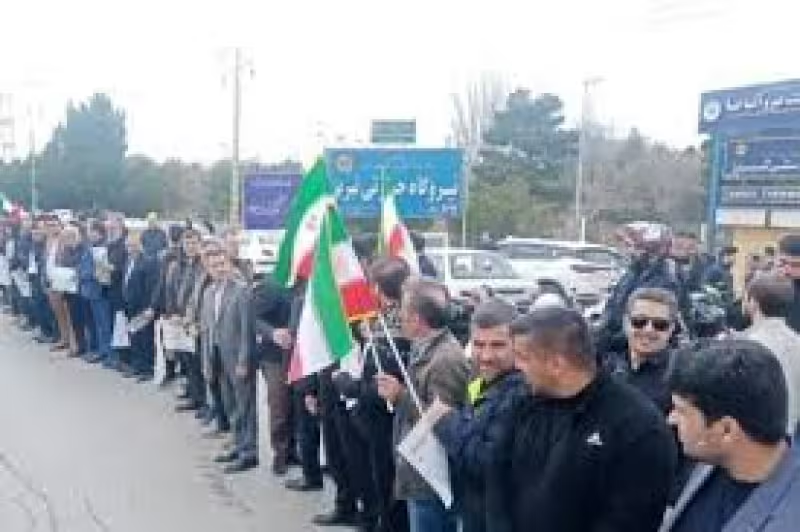
Iranian officials on Tuesday called on young people to form human chains around the country’s power plants as a deadline set by Donald Trump approached, and state media showed crowds gathering outside electricity stations in Tehran, Tabriz and Dezful. The displays came as people in the capital stocked up on basic provisions and the government pressed for public backing in the face of a threat of massive strikes on civilian infrastructure if Iran did not reopen the Strait of Hormuz by 8pm ET, or 1am BST.
In Tehran, one man said the move could only end badly. “No good can come out of this, since obviously the US and Israel don’t give a damn about Iranian people,” he said. “They are just following their own agenda.”
The strongest show of support was staged at the country’s largest power plant near Tehran and in Tabriz in the north-west, where state media showed people holding banners and waving Iranian flags. In Dezful in the south-west, crowds gathered on a bridge said to be 1,700 years old. Alireza Rahimi, speaking in a video message in a newscast, invited “all young people, athletes, artists, students and university students and their professors” to gather on Tuesday at 2pm around what he called national assets that belong to the future of Iran and to Iranian youth.

Read Also: Donald Trump Spurs Dow Jones Industrial Average 0.3% Gain Ahead
Masoud Pezeshkian said 14 million people had signed up in a voluntary drive to fight for their country and had “declared their readiness to sacrifice their lives in defence of Iran.” The call for human chains echoed a tactic Iran has used around its nuclear sites in the past during periods of heightened tension with the West, but this time it was aimed at power plants after airstrikes on Iran had already hit railways, the oil export terminal of Kharg Island, bridges and a petrochemicals complex.
Read Also: Trump Tweet Today: Trump's Iran threat sparks sarcastic embassy backlash
The Revolutionary Guards warned that “restraint is over,” adding: “We will do something with the infrastructure of America and its partners that will deprive America and its allies of oil and gas in the region for years.” That language, paired with the public rallies and the scramble in Tehran for supplies, leaves little doubt that the confrontation has moved beyond warnings and into a harder phase.