Democrats and Republicans have struck a deal to end the longest partial government shutdown in American history, with Democrats agreeing to reopen most of the Department of Homeland Security after holding out for new limits on immigration enforcement for more than a month. The Republican-led House had not yet approved the agreement, but President Donald Trump already signed orders to pay much of DHS out of other funds.
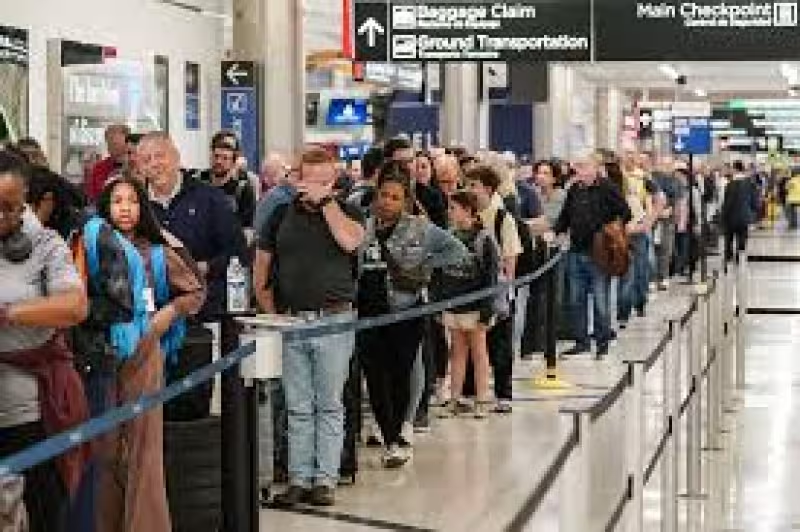
The shutdown had started to bite far beyond Washington. It inconvenienced thousands of travelers and drove hundreds of TSA workers to resign, turning airport delays into the clearest sign that the standoff was no longer just a budget fight. In Atlanta, long lines had already stretched through Hartsfield-Jackson Atlanta International Airport on March 27, 2026.
For nearly two months, Democrats said they would not reopen DHS unless Republicans accepted restrictions on immigration enforcement. That meant a ban on masked agents, a requirement that immigration officers get judicial warrants before entering homes, and new use-of-force standards. In the end, those demands were dropped. There is still no ban on masked agents. There is no warrant requirement. There are no new use-of-force rules.
Read Also: Donald Trump Spurs Dow Jones Industrial Average 0.3% Gain Ahead


Greg Casar, one of the Democrats pressing the hard line, called the outcome a vindication of the party’s stand-and-fight wing. He said Democrats held the line on not giving additional money to ICE until they won those reforms, even though the final deal did not deliver them. Democratic leaders cast the agreement as proof that their pressure had forced concessions, but the concessions came from their own side: they gave up the changes they had demanded for nearly two months.
John Thune, the Senate Republican leader, said the deal showed the opposite. “They got zero of the reforms that they were advocating for,” he said. “We didn't cave.” Republicans had been coalescing around a bipartisan plan to fund DHS except for Immigration and Customs Enforcement and Border Patrol, while President Donald Trump separately moved to keep much of the department operating by shifting funds from other accounts.
Read Also: James Carville Predicts Republicans Will Get Trounced in November
The politics of the shutdown had been moving against Republicans for weeks. Multiple polls suggested most voters blamed them for the impasse, and ICE enforcement itself was largely unpopular. At the same time, the Trump administration softened its immigration enforcement tactics during the shutdown, replacing Kristi Noem and Greg Bovino and withdrawing hundreds of federal agents from Minneapolis.
The deal now heads into the Republican-led House, where approval is still pending. The larger question is no longer whether Democrats can force a shutdown fight over immigration enforcement; they already did. It is whether they can point to a real policy win after giving up every major limit they said they wanted.