The forest fire season officially started April 1 in Ontario, but parts of Northwestern Ontario are still getting snow. Some areas have seen multiple snowfalls since the season opened, and more snow may fall later this week.
That matters because the first dry ground can turn into the first fire hazard. Chris Marchand said snow coverage is “somewhat variable from location to location,” with lower snowpacks showing up in the southern sectors along the Ontario-Minnesota border, especially around Fort Frances. Fire management staff there are closely watching local conditions so they can respond when wildfires begin to break out.
Marchand said the change can happen quickly once the thaw begins. “Despite the snow on the ground at this moment, we expect conditions to change quickly over the next few weeks,” he said. He added that if the snowpack melts slowly and steadily, dead grass and other fine fuels can stay wetter longer, reducing the early-season danger.
Read Also: AEI Finds American Middle Class Now Largest Income Group



That protection is only temporary. Open grassy areas are usually the first places to dry out, Marchand said, making highways and rail corridors early-season hazards. Outdoor burning rules are already in effect for the full fire season, and officials are warning that both burning and recreational activity can trigger new fires as people clean up properties and spend more time outside.
The province is also trying to build out its response for the 2026 season. Recruitment and hiring of fire rangers and pilots is still underway, and more than 2,500 applications for Northern Ontario fire ranger jobs were received this year. Typically, about 700 firefighters are hired each year for deployment across the north, a workforce that is being expanded by 68 permanent positions added over the past year and another 100 that came online in 2024 and 2025.
Read Also: Freeze Warning issued for Maryland as temperatures dip into the 20s
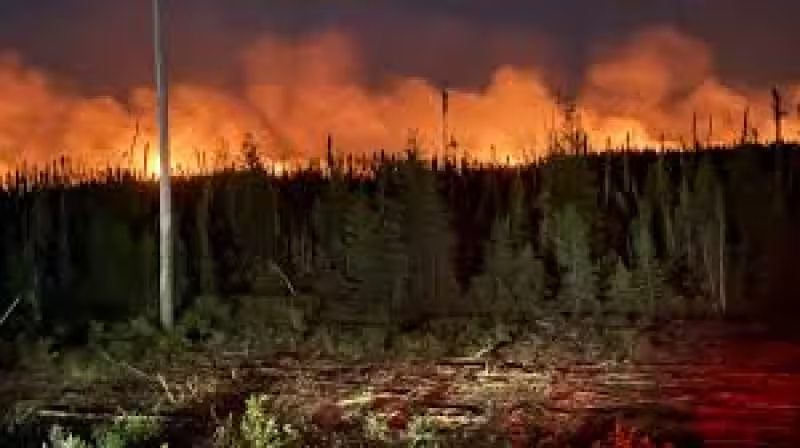
Ontario’s fire season is starting against the backdrop of a recent bad year. Over the past 10 years, the province has averaged 713 wildfires and about 210,000 hectares burned. Last year, Ontario had 70 fewer fires than average, but those blazes burned almost 600,000 hectares. The worst of them was Red Lake 12, which burned 197,000 hectares and remains the province’s largest fire on record.
So the answer to the question raised by an April start with snow still on the ground is not that Ontario is in the clear. It is that the season is beginning with uneven conditions, an early patchwork of dry fuel, and a fire system already being pushed to stay ready for a fast shift.