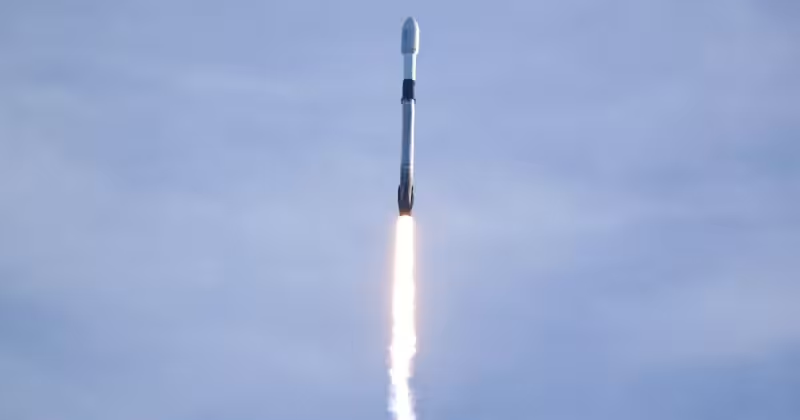
SpaceX is targeting Monday night for another spacex launch from Vandenberg Space Force Base, sending a batch of Starlink satellites into low-Earth orbit after a delay from Sunday evening. Liftoff is scheduled for 7:49 p.m. PT from Space Launch Complex 4 East in California.
The Falcon 9 rocket is expected to carry 27 Starlink satellites, though one mission description also lists 25 satellites for the same launch window. Either way, the flight adds to SpaceX’s fast-moving effort to expand the Starlink network, which provides broadband internet from a constellation of thousands of satellites orbiting about 550 km, or 341 3/4 miles, above Earth.
The booster supporting the mission is flying for the 10th time, a marker that underscores how much of SpaceX’s routine now depends on reuse. Falcon 9 is the company’s reusable, two-stage rocket and is widely described as the world’s first orbital-class reusable rocket. After stage separation, the first stage is planned to land on the drone ship Of Course I Still Love You in the Pacific Ocean.



Read Also: Todd Meadows’ cause of death revealed as his mother urges network not to air footage
That recovery plan has become part of the familiar rhythm of launches from California, where SpaceX rockets have previously been seen across Southern California skies. The company also plans a live webcast to begin about five minutes before liftoff on SpaceX.com, giving viewers a close look at one more attempt to add satellites to a network built to handle streaming, online gaming, video calls and other internet use.
Read Also: Uab launches RV clinic to bring care to Alabama moms and kids
If the launch goes as scheduled, Monday night’s flight will be another reminder of how routine the spacex launch cycle has become for SpaceX — and how much the company now depends on Falcon 9 boosters that can fly, land and fly again. The real story is no longer whether the rocket can do it, but how often SpaceX can keep doing it on schedule.