The world made around 360 million metric tons of plastic in 2024, up from just 2 million tons in 1950, and the surge is still accelerating. Without drastic policy changes, global output is projected to almost triple by 2060.
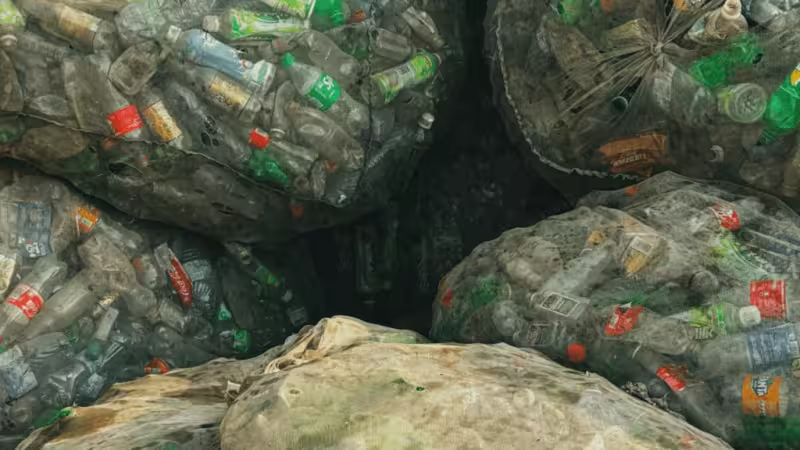
That scale of pollution is already overwhelming every stage of disposal. Half of projected plastic production by 2060 will end up in landfills, less than a fifth will ever be recycled, and a 2025 study in Nature found the global plastics recycling rate has stayed stuck at 9%.
The gap between what is made and what is recovered helps explain why scientists say 121 million metric tons of plastic waste could exist by 2050 without management, a mass equal to more than 36,000 Empire State Buildings. The rest is burned, buried or left to leach into rivers, soils and oceans.

Most of that material begins as fossil fuel. Over 98% of plastics are made from fossil carbons such as oil and gas, and plastic production and disposal account for roughly 3% of the world’s greenhouse gas emissions. Since 2010, fossil fuel companies have invested more than $180 billion into plastic plants in the U.S., locking in more supply even as waste piles up.
That mismatch sits inside a longer history of industry messaging that helped shift responsibility away from producers and onto consumers. In the late 1950s, food, drink, cigarette and packaging companies formed Keep America Beautiful in response to Vermont’s ban of single-use bottles, and the anti-litter group spent heavily on public campaigns promoting responsible disposable. In the late 1980s, Big Oil poured hundreds of millions of dollars into convincing the public that plastic was largely recyclable, while the coordinated disinformation campaign also included the construction of recycling facilities. Many of those plants shut their doors within five years.
What makes the latest numbers so hard to ignore is that recycling has not delivered the solution the public was promised. The industry’s own record, from the early anti-litter campaigns to more recent efforts to brand plastic as recyclable, shows a system built to keep producing, even as the waste stream outruns the machinery meant to handle it. That is why the next question is not whether plastic pollution is growing, but whether policy can move fast enough to slow the tide before 2050 and 2060 bring still more of it.