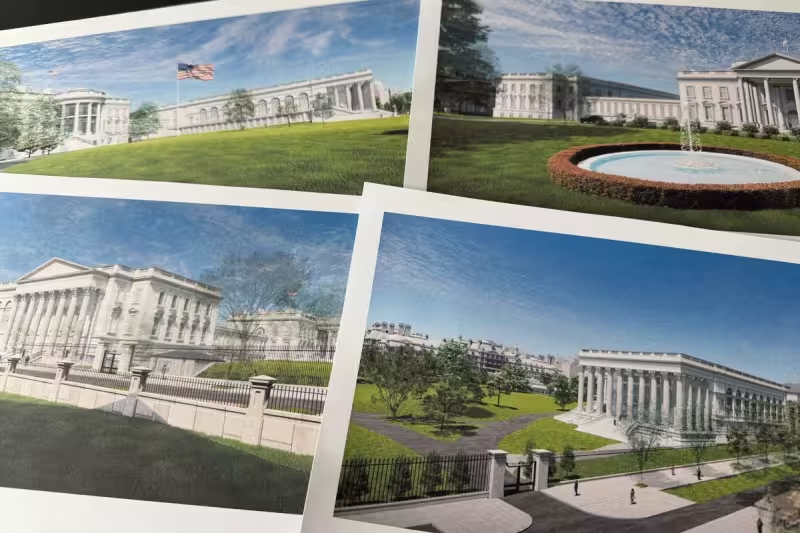
A federal appeals court on Saturday ordered U.S. District Judge Richard Leon to take another look at whether stopping President Donald Trump’s $400 million White House ballroom project could put security at risk. The three-judge panel from the U.S. Court of Appeals for the District of Columbia Circuit said it did not have enough information to decide how much of the work can be suspended without jeopardizing the safety of the president, his family or White House staff.
The case now goes back to Leon, who ruled on March 31 that work could not proceed without congressional approval. He had suspended enforcement of that order for 14 days, and the appeals court extended the pause by three days to April 17 so the Trump administration can ask the Supreme Court to intervene. The administration has said aboveground construction on the ballroom would begin in April.
The dispute turns on a project the White House says includes security features below the ballroom, while the president’s opponents argue the construction itself cannot move ahead lawfully without Congress. Government lawyers told the court the project includes critical protections against drones, ballistic missiles and biohazards, and said holding up construction would imperil the President and others who live and work in the White House. Leon, however, exempted construction work needed to keep the White House safe and said he reviewed private material submitted by the government before concluding a halt would not jeopardize national security.
Read Also: Donald Trump Spurs Dow Jones Industrial Average 0.3% Gain Ahead


Leon last month also said the lawsuit was likely to succeed because no statute comes close to giving the President the authority he claims to have. He wrote that the president is the steward of the White House for future generations of First Families, but not its owner. The National Trust for Historic Preservation sued in December, a week after the White House finished demolishing the East Wing for a 90,000-square-foot, or 8,400-square-meter, ballroom Trump said would fit 999 people.
The latest ruling leaves Leon to sort out a sharp conflict in the government’s own position. The White House first said the below-ground security work was distinct from the ballroom itself and could proceed independently, then later suggested the security upgrades are inseparable from the project as a whole. That question is now central: whether halting the ballroom would stop only a ceremonial build, or whether it would also disrupt the fortified facilities the administration says are tied to the safety of the White House itself.
Read Also: John Fetterman rebukes Democrats mocking Trump’s Iran ceasefire deal
For now, the project remains in legal limbo. Leon must decide whether the security concerns are enough to narrow or delay his injunction, while the administration races toward a possible Supreme Court appeal before the April 17 deadline.