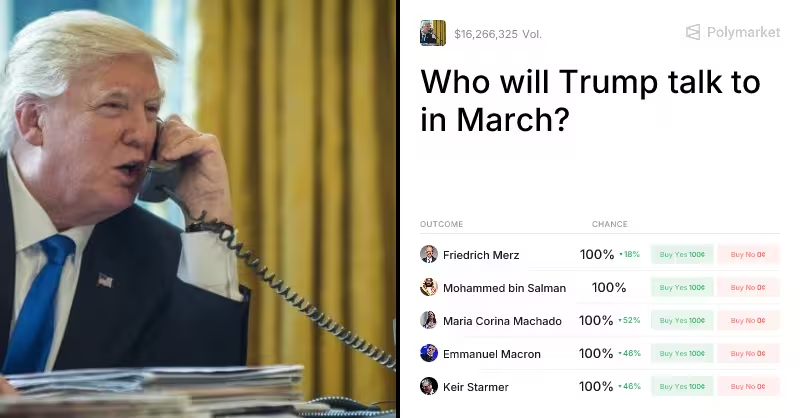
The White House warned staff last month not to use insider information to place bets on prediction markets, sending an email on 24 March as President Donald Trump announced a five-day pause on his threat to attack Iranian power plants and energy infrastructure.
The email, first reported by The on Thursday, came a day after Trump’s announcement and followed press reports that raised concerns about government officials using non-public information to wager on platforms such as Kalshi or Polymarket. The message put the warning in plain terms: federal employees are not allowed to use inside information for financial gain.
The warning landed at a moment when prediction markets have moved from a niche curiosity into a fast-growing corner of finance. They now host more than $44bn (£33bn) in trades, and users can bet on everything from whether the US central bank will cut rates to the results of local elections. That growth has also brought scrutiny, especially when market swings appear to track events that had not yet been made public.
Read Also: Donald Trump Spurs Dow Jones Industrial Average 0.3% Gain Ahead


Polymarket faced fresh attention in January after a gambler made nearly half a million dollars on the capture of Venezuelan president Nicolás Maduro just before it was officially announced. It was unclear who placed the bet, but the episode sharpened questions about whether traders with access to sensitive information can exploit gaps in the system before the public catches up.
Davis Ingle, the White House spokesman, said any implication that Administration officials are engaged in such activity without evidence is baseless and irresponsible reporting. He said all federal employees are subject to government ethics guidelines that prohibit the use of insider information for financial gain, and added that “The only special interest that will ever guide President Trump is the best interest of the American people,”
Read Also: Pope Leo XIV condemns Trump Iran threat as 'truly unacceptable'
The political backlash is widening around the same time. This week, US Congressman Ritchie Torres sent a letter to the Commodity Futures Trading Commission calling for an investigation into suspicious trades, and in March Democrat leaders introduced legislation that would completely ban prediction market betting tied to war or military action. Senator Andy Kim said in March that “Corruption and exploitation are thriving right now within the gaps and loopholes of prediction markets,” a warning that now sits squarely over a market regulators are still trying to define. The question is no longer whether prediction markets are drawing public attention. It is whether the rules around them can keep up before the next trade becomes the next scandal.