Pope Leo XIV said Tuesday that Donald Trump’s threat to destroy Iranian civilization was “truly unacceptable,” delivering a sharp public rebuke as he spoke outside his country house in Castel Gandolfo, south of Rome. The pope also warned that attacks on civilian infrastructure violate international law and urged Americans and other people of good will to contact their political leaders and congressional representatives to demand an end to the fighting.
“Today as we all know there was this threat against all the people of Iran. This is truly unacceptable,” Leo said as he left the residence. He added that strikes on civilian infrastructure are “against international law” and are “a sign of the hatred, the division, the destruction human beings are capable of, and we all want to work for peace.”
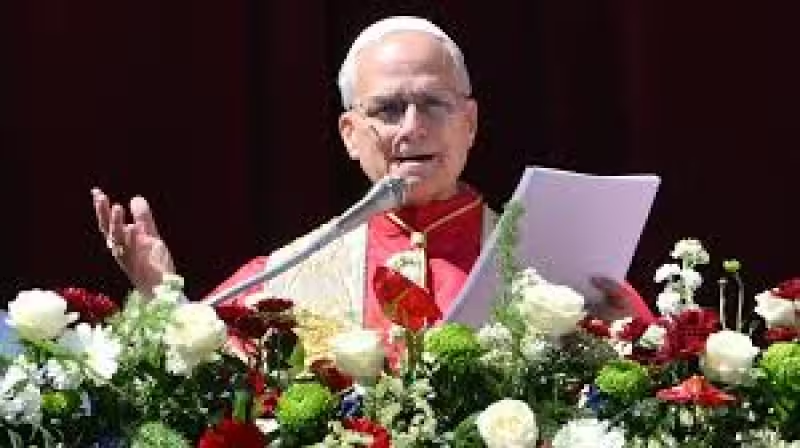
Leo’s comments marked a further step in a Vatican response that has become increasingly direct. Last week, he publicly named Trump and said he hoped the U.S. president was truly “looking for an off-ramp.” On April 6, 2026, he had delivered his blessing and recited the Regina Coeli noon prayer from the window of his studio overlooking St. Peter’s Square at the Vatican, part of a pattern of increasingly urgent appeals for peace.
Read Also: Donald Trump Spurs Dow Jones Industrial Average 0.3% Gain Ahead
The Vatican has long kept to diplomatic neutrality, which makes it rare for a pope to criticize a political leader or country by name. Leo had initially issued muted appeals for peace and dialogue, but the war in Iran has prompted him to break with that usual protocol and to speak with more force about what he called “an unjust war” that is “continuing to escalate” and is “not resolving anything.”
Read Also: Trump Tweet Today: Trump's Iran threat sparks sarcastic embassy backlash
For now, Leo is pressing the conflict into political space well beyond the Vatican walls, asking voters to lean on their leaders while the war deepens. The question his remarks leave behind is not whether he wants peace — he has said that plainly — but whether his direct criticism can push anyone in Washington or elsewhere to change course.