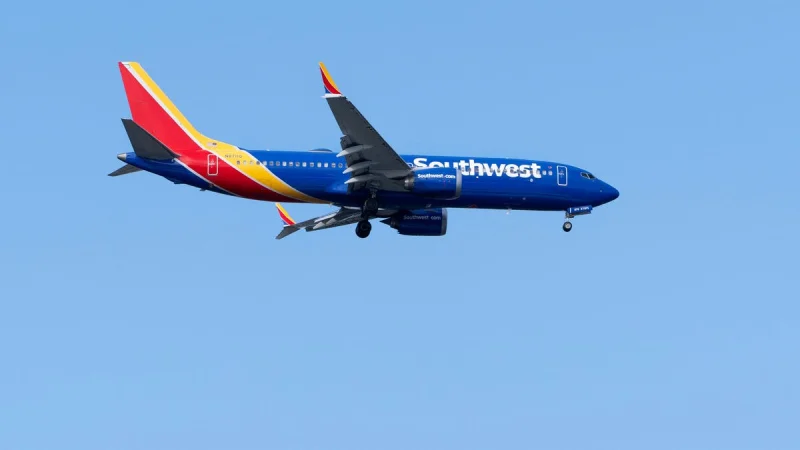
A Southwest flight from Albuquerque to Baltimore diverted to Tulsa, Oklahoma, on Monday after the crew reported a cracked windshield, leaving passengers to reach their destination about four hours late. Flight 2665 took off from Albuquerque around 2 p.m., about 20 minutes behind schedule, and was expected to land in Baltimore roughly three and a half hours later.
Just over an hour into the trip, the Boeing 737 turned south while cruising at 37,000 feet and landed safely in Tulsa after the cockpit crew reported the crack. The aircraft involved was registered as N265WN and is over 19 years old. Southwest said the flight “diverted safely to Tulsa due to a windshield crack” and “landed uneventfully,” adding, “We appreciate the professionalism of our Flight Crew,” while the FAA said the plane landed safely after the crew reported a cracked windshield and would investigate the incident.


Passengers were rebooked onto another airplane that reached Baltimore around 11:30 p.m. The replacement flight arrived about four hours later than they first expected, closing out a long delay for a routine domestic trip that turned into an unscheduled stop in Oklahoma.
The diversion fits a small but unsettling category of aircraft problems that can force a change of course without becoming an emergency. Plane windshields are built with several layers so they can keep working safely if one layer is damaged, and bird strikes are more common than damage from a weather balloon or space debris, though it is still rare for those events to crack a windshield. Last October, a United Airlines jet had its windshield cracked by a weather balloon at 36,000 feet, and last month a government airplane carrying Pete Hegseth turned back over the Atlantic after its windshield cracked. The most notorious case dates to 1990, when a British Airways pilot was partially ejected in a windshield incident tied to incorrect screws.
For Southwest, the question is not whether the flight got where it was going; it did. The issue is how quickly a single cracked panel can take a plane out of service and send a full cabin onto a backup aircraft, a reminder that even when the safety systems work exactly as designed, passengers can still lose an evening to a problem they never saw coming.