
Jelena Ostapenko swept past Anna Kalinskaya 6-1, 6-2 on Monday in 70 minutes to reach her fifth quarterfinal in Rome, a match that never settled into a long fight but still carried the edge of a player moving through the Italian Open on her own terms.
The No. 22 seed did not face a clean finish. Kalinskaya took an off-court medical timeout after the first set, and there was no handshake at the end. Ostapenko said that was Kalinskaya's choice, adding that she had already prepared for “all kinds of simulations” with medical calls and other interruptions. She said Kalinskaya is a tricky opponent who tries to disrupt rhythm when she starts losing, but that she was proud of herself for managing the match and losing only three games.
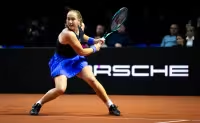
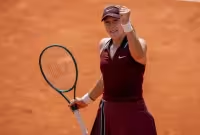
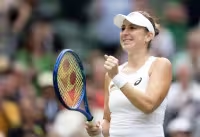
The win continued a sharp turn for Ostapenko on the Foro Italico clay. Before this week, she had been 0-8 combined against her previous three opponents in Rome, yet she came from a set down to beat Elena-Gabriela Ruse and Zheng Qinwen before handling Kalinskaya with far less strain. Ostapenko said she is improving every day, that she always knew she can beat everyone when she plays her game, and that the mental side remains the part she still has to tighten. “I know I’m a better player,” she said, while also stressing that she respects other players even when she is emotional on court.
That progression matters because from the quarterfinals on, every match in Rome moves to Centrale, where Ostapenko will face No. 26 seed Sorana Cirstea. Ostapenko has a 7-2 career record on Pietrangeli and won all three matches there this year before the tournament shifted venues. She described Cirstea as a super nice person, said the Romanian is playing really well this year, and noted that they have met many times. She also pointed to Cirstea’s final year on tour as a source of freedom, saying it removes some of the pressure to defend points, and praised her as a hard worker who has had to come back from injuries more than once.
Cirstea’s run has its own weight. She upset No. 1 seed Aryna Sabalenka in the third round and then beat No. 13 seed Linda Noskova 6-2, 6-4 to reach her first Rome quarterfinal, the 11th quarterfinal of her WTA career. Cirstea said all the expectations went through the window because she did not have to prove anything anymore. For Ostapenko, the next step is a familiar kind of test: a player she knows well, on a bigger court, with the same question she has been answering all week — whether the version of her game she trusts can hold when the draw gets smaller and the pressure gets louder.