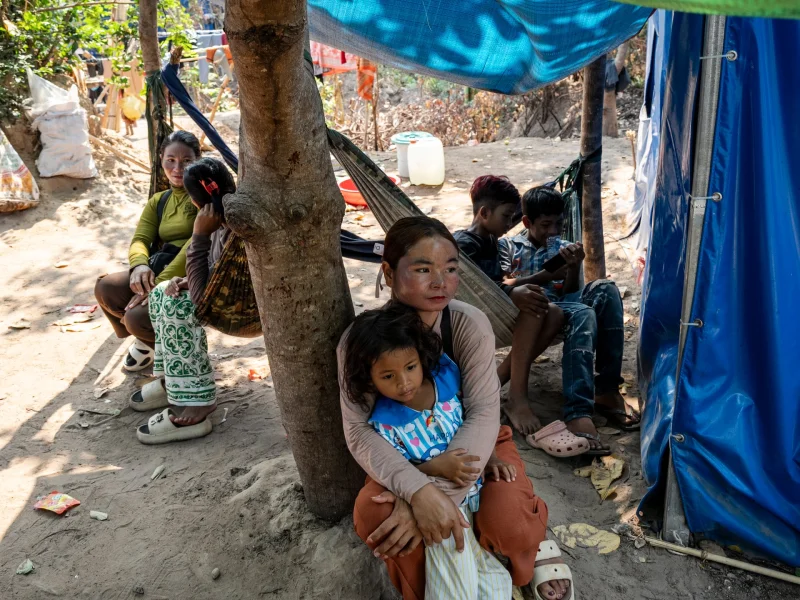
Sokna sleeps in a blue tarpaulin tent in the grounds of a Buddhist pagoda in northwestern Cambodia, while she and her sister have stopped going to school. Their family is among thousands still living in displacement camps five months after a ceasefire ended the latest fighting along the Thai-Cambodia border.
More than 34,440 people remain displaced in Cambodia this month, including 11,355 children, as families wait in camps and survive on aid donations. Some are now moving from emergency tents into wooden stilted houses provided by the Cambodian government, but many still fear the border could erupt again.
Puth Reen, who returned to live in Cambodia after years of working in neighbouring Thailand, said she has tried to send the children back to class, but they do not go. Her family’s life has been upended by a dispute that has already driven hundreds of thousands from their homes and left many looking over their shoulders even after the guns fell silent.
The border conflict between Thailand and Cambodia flared in July last year for five days, then again for almost three weeks in December. Dozens were reported killed on both sides, and both armies fired artillery and rockets, while Thailand also carried out air strikes deep inside Cambodian territory. Cambodian and Thai officials reached a ceasefire on December 27, but the border has stayed tense ever since.
That tension now reaches into villages such as Chouk Chey and Prey Chan in Banteay Meanchey province, which have become rallying points for nationalists posting about Thai occupation of Cambodian territory. Thai forces have blocked access to some villages with shipping containers and barbed wire, and Cambodian troops have also kept some people from returning to front-line homes.
Sun Reth, 67, said authorities would not let her sleep in her own house or pick cashew nuts from her farm to earn money. She said the Cambodian military base now sits beside her home, a reminder that the ceasefire has not ended the hardship for people living closest to the line.
Five months after the ceasefire, the border remains less a settlement than a pause, and for families like Sokna’s, the next clash is not a distant diplomatic risk but a daily fear.