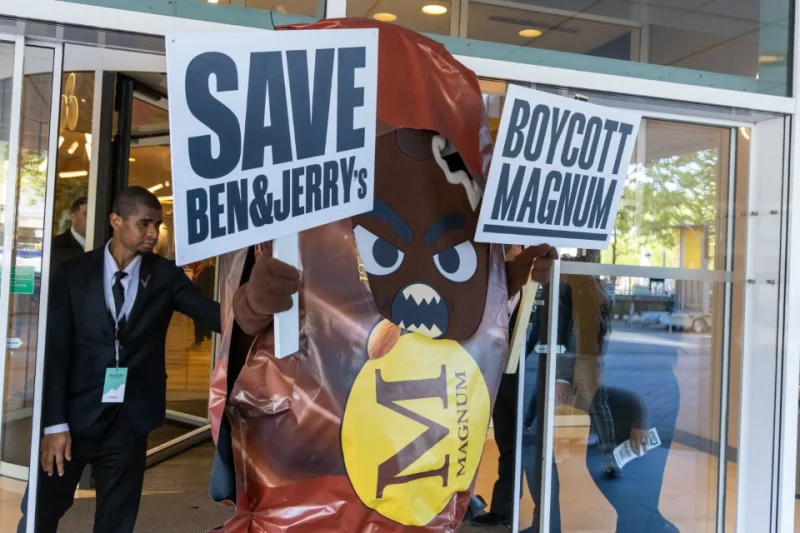
Jerry Greenfield has resigned from Ben & Jerry's after 47 years with the company, sharpening a long-running clash over who controls the ice cream maker's social mission and brand. His departure comes as Magnum, the ice cream business spun out of Unilever, heads into its first shareholder meeting as a public company on May 7 with shares at a 52-week low.
Greenfield and Ben Cohen sold Ben & Jerry's to Unilever in 2000 for a reported $326 million, but they pushed for a deal that would let the company keep an independent board to protect its values. That structure has now become the center of the dispute. By January 1 this year, Magnum had removed all of Ben & Jerry's independent directors except for one Unilever-appointed director and the CEO, and the independent board sued, saying the move directly violated the merger agreement.
The fight has widened beyond the boardroom. The Ben & Jerry's Foundation won a court ruling to join the lawsuit after Magnum stopped providing approved funding, and a former board chair has separately filed an independent defamation case in California. Greenfield, in a statement about his resignation, said, “We're turning up the heat,” while Liz Bankowski said, “This is about more than a contract” and added, “It's about whether a corporation can weaponize a governance structure and withhold funding when prior commitments and values become inconvenient.”
The conflict traces back to the unusual terms of the 2000 sale, when Cohen and Greenfield hoped the brand would keep expanding its role in society under Unilever's ownership. Instead, the dispute now covers director removals, foundation funding and governance rights inside Magnum, with Cohen separately pressing the company to sell Ben & Jerry's to a values-aligned investor group and threatening a boycott of Magnum products if it does not comply. Magnum shares have fallen roughly 25% from their February high, leaving the company under pressure just as the battle over Ben & Jerry's enters another public phase.
Greenfield's exit does not resolve the fight; it gives it a more visible face. With the stock under pressure, the boardroom split in court and the company now a public-market story, the next move belongs to Magnum and to the shareholder meeting that will test how much control it can really exert over the brand it bought a quarter-century ago.