
The four astronauts of Artemis II returned to Earth after a 10-day mission to the Moon, splashing down in the Pacific Ocean off the west coast of the United States after a flight that pushed them farther into space than any humans before them. Their Orion spacecraft, nicknamed Integrity by the crew, came home after racing through Earth's atmosphere at nearly 25,000 miles per hour and facing temperatures of 2,760C.
That return brought to a close a mission that broke the previous record for the furthest humans ever travelled into space, a mark that stood until the crew's trip. The achievement matters today because it is the first proof, in the flight itself, that the Artemis II mission could take people to the Moon and back on a route that tested both the spacecraft and the astronauts at the edge of human spaceflight.
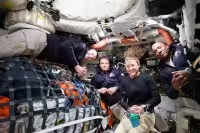

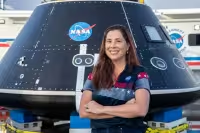
Integrity was more than a call sign for the crew; it was the vehicle that carried them through the hardest part of the journey and back through re-entry, when heat and speed turn a return to Earth into a narrow calculation. The spacecraft's performance during that final plunge now sits at the center of the mission's success, because the record distance alone means little if the vehicle cannot survive the trip home.
The next question is no longer whether four astronauts can make the journey to the Moon and return. It is how quickly the Artemis program can turn this record-setting flight into the one that follows it.