Donald Trump warned Tuesday morning that a whole civilization would die tonight unless Tehran met his latest deadline, set for 8 p.m. in Washington, and said the deal with Iran must include reopening the crucial Strait of Hormuz. He said the agreement could still produce “maybe something revolutionarily wonderful can happen,” but added that he would destroy Iran’s power plants and bridges if traffic through the strait does not fully resume.
Iran answered with a broad mobilization call of its own. Officials urged young people to form human chains around power plants, while President Masoud Pezeshkian posted on X that 14 million Iranians had answered campaigns urging people to volunteer to fight. A Revolutionary Guard general also urged parents to send their children to man checkpoints, and the Guard said Iran would deprive the U.S. and its allies of the region’s oil and gas for years if Trump carried out his threat.
The stakes are not abstract. A fifth of the world’s oil transits through the Strait of Hormuz in peacetime, making Trump’s demand over the waterway one of the most consequential parts of the standoff. Talks were still ongoing, but the source said Iran had rejected the latest American proposal, and the timing on Tuesday gave both sides little room before the deadline expired.
Read Also: American woman missing in Bahamas after falling from dinghy

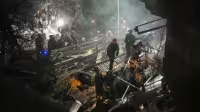
Military pressure added to the political threat. Airstrikes hit two bridges and a train station in Iran, and the U.S. struck military targets on the oil hub of Kharg Island for the second time. Israeli Prime Minister Benjamin Netanyahu said Israeli warplanes struck bridges and railways in Iran because the Revolutionary Guard was using them to transport materials to make weapons. Israel also issued a Farsi-language warning telling Iranians to avoid trains throughout the day.
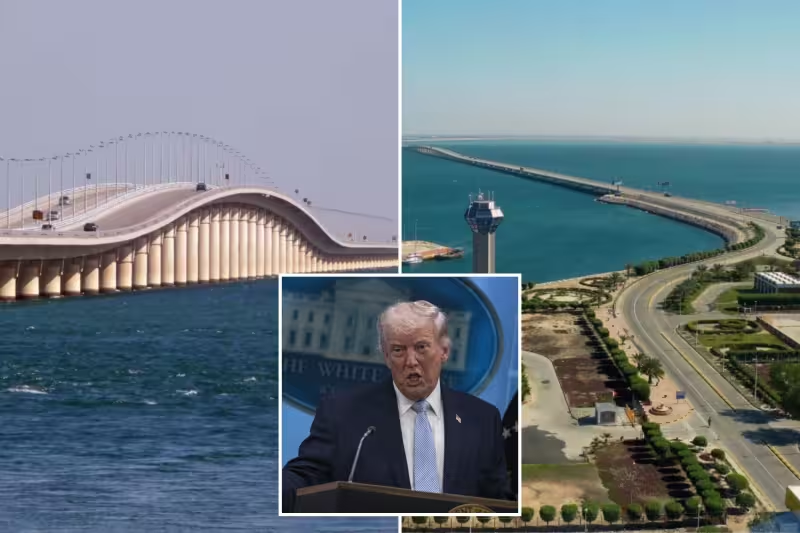
The fighting widened further when Iran fired on Israel and Saudi Arabia, prompting the temporary closure of a major bridge. The series of attacks and warnings turned transportation routes into both targets and messages, a sign that the conflict is now reaching beyond the battlefield and into the infrastructure that keeps the region moving.
Read Also: Strait Of Hormuz Travel Disruptions as Trump Threatens Iran Deadline
Iran has used human chains before around nuclear sites during periods of heightened tension with the West, but Tuesday’s appeal pointed to a sharper and broader mobilization. With power plants, bridges, rail lines and the Strait of Hormuz all pulled into the confrontation, the next move from either capital could determine whether the crisis stays contained or spreads into the waterways and supply lines that carry much of the world’s energy.