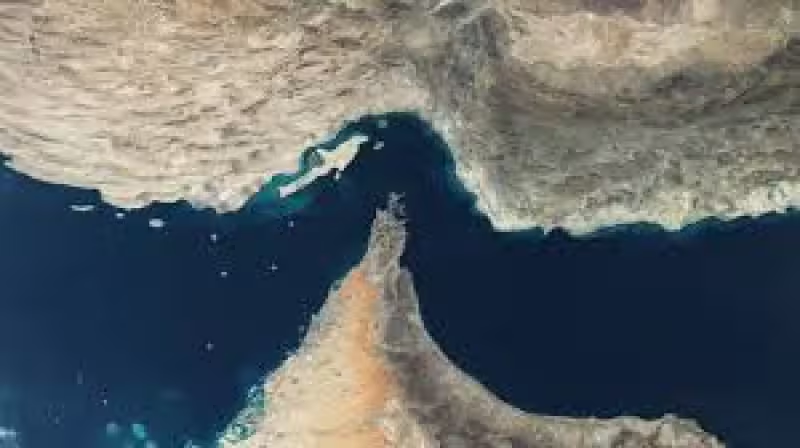
Donald Trump threatened on Monday to take out Iran “in one night” if it failed to agree to a deal by 20:00 Washington DC time on Tuesday to reopen the Strait of Hormuz. The warning came as several Asian countries, including Pakistan, India and the Philippines, have struck arrangements with Tehran in recent weeks to let some ships pass through the waterway safely.
The Philippines now has a deal of its own, reached after what Theresa Lazaro called “a very productive phone conversation” with Tehran on Thursday. The Philippine foreign secretary said Iranian officials had assured “safe, unhindered and expeditious passage” for Philippines-flagged ships, an arrangement Manila clearly sees as vital because the country imports 98% of its oil from the Middle East and was the first country to declare a national energy emergency after petrol prices more than doubled when the Iran war began.
That makes the timing hard to miss. Trump’s deadline, set for 00:00 GMT Wednesday, lands while governments from Asia are still trying to keep tankers moving through a choke point that carries a fifth of the world’s energy shipments. China has already acknowledged that its vessels have used the channel, adding another layer to a situation in which access appears to be getting carved up country by country rather than guaranteed across the board.



Read Also: Iran Peace Plan Faces Deadline as Trump Threatens Strikes in Iran
The Strait of Hormuz has become a global flashpoint after Tehran retaliated to US and Israeli airstrikes by threatening to attack ships in the strait, and oil prices have surged since shipping disruption spread through the narrow waterway. Iran has said the strait is open to all countries except the US and its allies, a line that leaves room for the sort of selective access now emerging in talks with Asian governments.
Read Also: Israel Says No Ceasefire Expected in Coming Days
Roger Fouquet said the Philippines could be a sign that Iran is “willing to compartmentalise”, adding that “Iran appears to be distinguishing between a country's alliance and its active participation in the conflict.” That distinction matters because it suggests the practical rules on the water may be narrower than the rhetoric on land. For shippers, the unanswered question is not whether the strait matters — it is whether the assurances now being given apply only to some vessels, or whether they can hold for all of them.