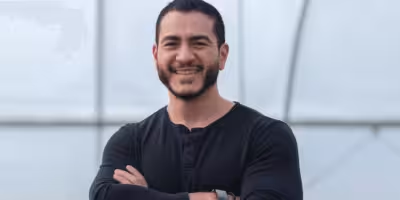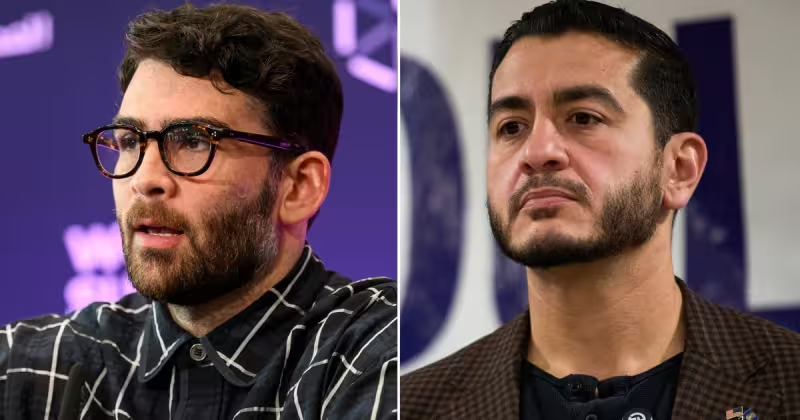
A heated fight over criticism of Israel and the role of online commentator Hasan Piker has opened a new front in Michigan’s Senate race, with Abdul El-Sayed, Mallory McMorrow and Haley Stevens locked in a tight three-way contest. The clash has split progressive and establishment Democrats just as the race enters a stage where turnout, not just ideology, could decide the winner.
Stevens is backed by Aipac, while McMorrow, the Anti-Defamation League, the Trump administration, Third Way, Sen. Elissa Slotkin and other pro-Israel figures have moved to portray Piker as antisemitic and tie him to El-Sayed. Last week, El-Sayed and Piker announced plans to rally together, giving the dispute a fresh target in a state where every headline can matter. Piker has an audience of 3 million on Twitch and has built it by repeatedly attacking Israel over its assault on Gaza, the invasion of Lebanon, the war with Iran and its treatment of Palestinians. He has also described Hamas as “a thousand times better than the fascist settler colonial apartheid state,” interviewed Bernie Sanders and won praise from him. The Harris campaign even invited him to livestream from the Democratic national convention in August 2024.
The backlash sharpened after McMorrow and her surrogates said Piker should be shunned because the rallies come less than a month after the Temple Israel synagogue attack. That criticism now collides with a very different political reality in Michigan, where Arab American leaders say the party is replaying mistakes from 2024 instead of absorbing them. The state has the nation’s largest Arab American population per capita and is anchored by a large Lebanese diaspora, much of it from southern Lebanon, while Israel’s assault on southern Lebanon has made the controversy even more immediate for many voters.



Read Also: AEI Finds American Middle Class Now Largest Income Group
Seven Arab American leaders told that the attacks on El-Sayed and Piker are strategic and moral blunders. Basim Elkarra said, “They are not showing empathy toward Lebanese and Muslim communities.” He added that “some in the Democratic party haven’t learned from 2024” and warned that “especially in a battleground state, I think they’re going to suffer the consequences in 2028 if they don’t rectify their strategy.” The numbers behind that warning are already visible. Kamala Harris lost Michigan in 2024 by 80,000 votes, one estimate said support for Israel cost her 100,000 votes in the state, and a November 2024 Guardian analysis found a 22,000-vote swing away from Democrats in the three cities with the largest Arab American and Muslim populations. One poll also found Israel was the top issue for Democrats who did not support Harris.
Read Also: Ro Khanna spotlight as Michigan Democrats split over Hasan Piker
The fight shows how deeply Israel’s wars have cut through the Democratic coalition in a state that is often decisive in presidential politics and now central to control of the Senate. For El-Sayed, the dispute is not just about one rally with one streamer. It is about whether Democrats in Michigan can keep Arab American and Muslim voters in the tent while answering accusations of antisemitism at the same time. If they cannot, the cost may not be measured only in this three-way race, but in the next statewide election after it.