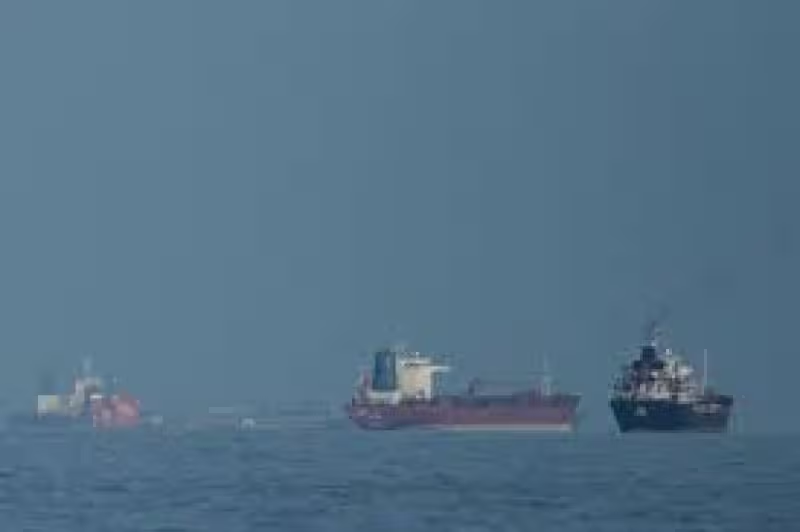
President Donald Trump said the war in Iran was "very close to over" in clips of an interview set to air Wednesday, as the US military said its blockade on Iranian ports had been fully implemented. Pakistan said Tuesday it was pursuing efforts to help the United States and Iran negotiate an end to the war, while Trump separately told the New York Post that a second round of talks with Iran could be happening over the next two days.
The latest diplomacy puts a fresh spotlight on a conflict that has already produced a steep human toll and a widening regional crisis. A source in the material said 2,124 people were affected, underscoring why the pace of negotiations matters now, not later. For readers tracking the economic fallout, the same pressure points are feeding wider concerns about inflation and growth, including warnings outlined in Global Economic Outlook 2026: IMF warns Iran war risks recession, higher inflation.
Recep Tayyip Erdogan said Wednesday that talks between the United States and Iran have hit obstacles, especially on the nuclear issue, and warned that diplomacy cannot move forward by force. "Negotiations cannot be conducted with clenched fists. Weapons must not be allowed to speak again instead of words," Erdogan said. "The Israeli government, which is known to be displeased with the ceasefire, must not be allowed to sabotage the process."

Russia also signaled it could re-enter the file that shaped the last major nuclear accord. Sergey Lavrov said Moscow was ready to "play a role in solving the problem of enriched uranium in Iran," including reprocessing highly enriched uranium into fuel-grade uranium or transferring some uranium to Russia for storage. China said it "welcomes all efforts conducive to a cease-fire and the cessation of hostilities."
The diplomacy carries the imprint of the 2015 nuclear deal, when Russia was part of the agreement between Iran and six nuclear powers that offered sanctions relief in exchange for curbs on Tehran's atomic program and broader international scrutiny. During Trump's first term, the Kremlin offered political support to Iran after the United States unilaterally withdrew from the deal, and that history helps explain why Moscow is again presenting itself as a broker. Pakistan's role also fits a broader effort to prevent the crisis from hardening into a deeper stalemate, even as outside pressure, regional rivalries and the nuclear question keep narrowing the space for a deal.
That leaves the central question not whether diplomacy exists, but whether it can move quickly enough to matter. Trump is signaling progress, Erdogan is warning against sabotage, Russia is offering a technical fix and China is backing a cease-fire, but the talks still have to survive the politics around them. The next two days could show whether this turns into an agreement or just another round of statements around a war that is still unresolved.