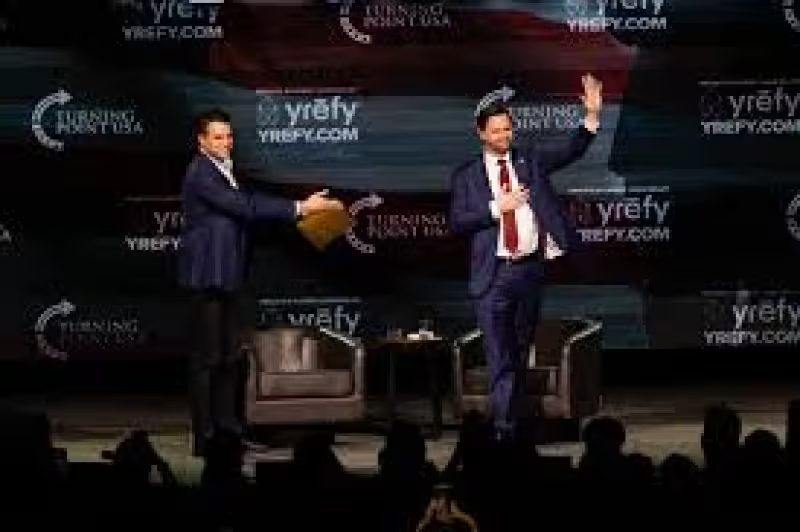
Erika Kirk canceled her appearance at a Turning Point USA event in Athens on Tuesday after receiving threats, and Vice President JD Vance took the stage without her at the Georgia stop less than a mile from the University of Georgia campus.
A Turning Point spokesperson said Kirk would not take part in the planned question-and-answer session after Vance spoke. The event at Akins Ford Arena, which holds 8,500, drew a smaller crowd than the tour stop earlier this month at George Washington University, where about 1,400 people turned out to hear White House press secretary Karoline Leavitt and Kirk.
Vance told the audience, “I love Erika and she did get some threats,” and said he had worried for about two hours that the event might have to be canceled. Andrew Kolvet said he did not specify the nature of the threats or share any additional details. Athens-Clarke County police said it was not aware of any threats. The FBI and U.S. Secret Service did not respond immediately to requests for comment Tuesday night.
The Athens appearance was the second stop on Turning Point USA’s “This Is the Turning Point Tour,” a five-city college tour aimed at building support among young voters for Republican candidates ahead of the midterm elections and Georgia’s governor’s race. The organization has leaned on high-profile speakers and on the widow of Charlie Kirk, who was fatally shot last September by a rooftop sniper while speaking at Utah Valley University, as it tries to keep the tour moving through campus-heavy political territory.
Vance also used the event to press his case on Iran, saying the U.S. wants Tehran to join the world economy and arguing that President Donald Trump wants a deal that leaves Iran without a nuclear weapon and not a state sponsor of terrorism. He also criticized Pope Leo XIV’s comments about the war, saying it was important for public officials to be careful when speaking and, in the same way, important for the pope to be careful when he talks about theology. The cancellation put a sharper edge on a tour meant to project momentum; it also showed how quickly security concerns can change the shape of a campaign-style event built around a slain activist’s widow.