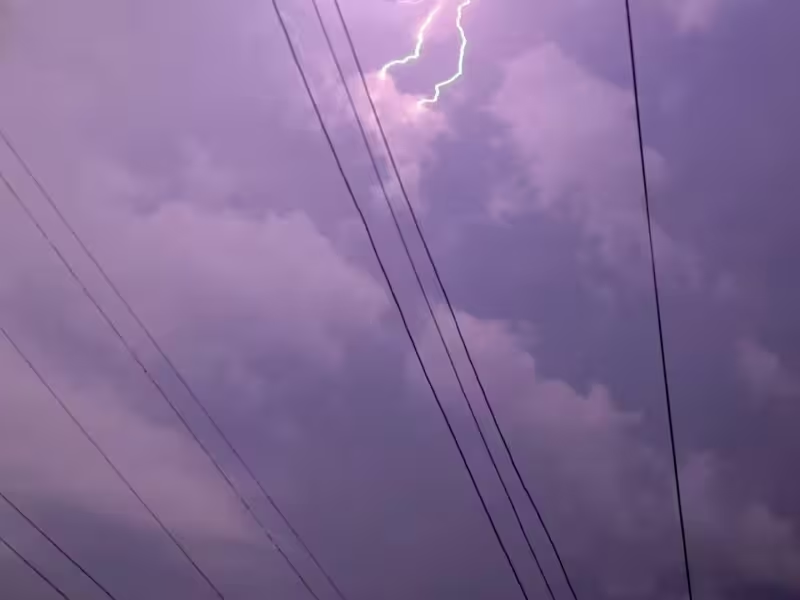
Southern Minnesota, including the Twin Cities, is in for severe weather Monday between 3 and 11 p.m. ET, and residents are getting a live lesson in the difference between a tornado warning vs watch. The National Weather Service expects to issue both as storms build by late afternoon and strengthen quickly.
“It’s kind of appropriate,” Jacob Beitlich said, with Severe Weather Awareness week beginning Monday, April 13. “We have high confidence we will have severe weather,” he said, adding, “We want people to be informed.”
As of 1 p.m., no watches or warnings had been issued in Minnesota, but a large part of the state was already under an enhanced risk from the southern metro to the Iowa border and east to the Wisconsin border. That zone carried the threat of hail 2 inches in diameter or larger, isolated tornadoes and damaging winds, with cities including Rochester, Winona, Mankato, Owatonna, Albert Lea and Austin in the area.

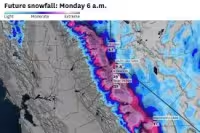
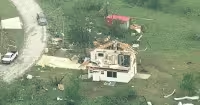
That is where the warning and watch distinction matters. A watch is issued one to two hours before storms develop and usually covers a broad area when conditions are favorable for severe thunderstorms, hail, tornadoes or flash floods. A warning comes when thunderstorms with high winds, lightning or hail at least 1 inch in diameter have been observed by trained spotters, or when radar indicates a tornado, and it means people in the storm’s path should take shelter immediately.
Sirens operated by cities and counties may sound during a warning, and the alerts are narrower, often covering specific counties or parts of them and the cities in the storm’s path. The Weather Service urged people to have more than one way to get alerts, including radio, TV, weather websites or a NOAA weather radio.
North of the enhanced risk, a slight risk covered the north metro and cities such as Worthington, Willmar, St. Cloud, Mora and Alexandria. Northwestern Wisconsin cities and towns were also under the gun, according to Beitlich, while Fergus Falls, Bemidji and the Duluth-Superior area were in low-risk zones.
For Minnesota, the timing is the point: a forecast that calls for storms by late afternoon, an expectation that they will intensify quickly, and a day built to remind people that a watch is preparation and a warning is action.