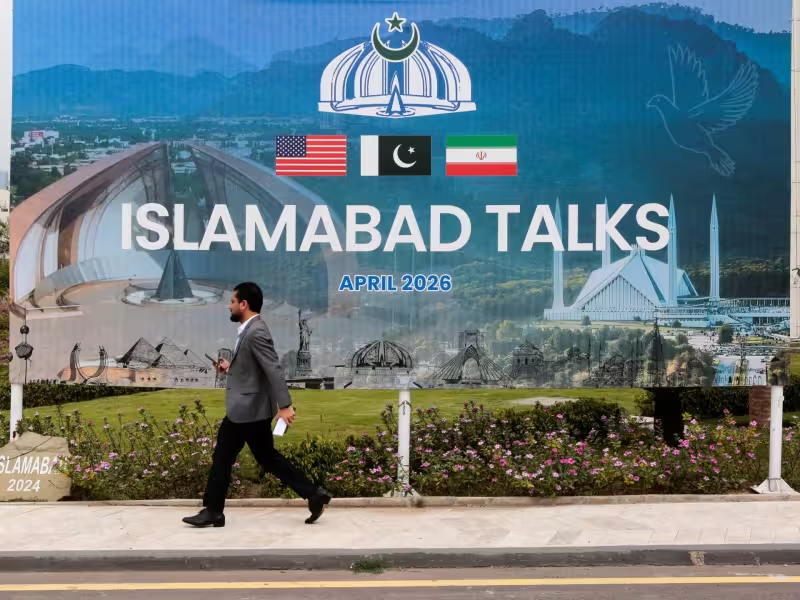
The United States and Iran opened in-person talks in Pakistan on Saturday afternoon in an effort to end their six-week-old war, with both sides meeting in Islamabad after separate sessions with Pakistani Prime Minister Shehbaz Sharif. The delegations were led by U.S. Vice President JD Vance and Iran’s parliamentary Speaker Mohammad Bagher Ghalibaf, marking the highest-level face-to-face contact since the fighting began.
The U.S. team included special envoy Steve Witkoff and President Donald Trump’s son-in-law Jared Kushner. Iran sent a delegation of more than 70 people that also included Foreign Minister Abbas Araghchi. The talks were initially meant to be proximate, but sources close to the mediation said the two sides were in direct negotiations with Pakistani mediators also present.
Pakistan’s government said Sharif looked forward to continuing to help both sides and hoped the talks would become “a stepping stone toward durable peace in the region.” That matters because the war has already exacted a heavy toll: Israeli attacks on Iran-backed Hezbollah fighters have killed nearly 2,000 people since the fighting started in March, and the latest diplomacy is unfolding only days after a fragile ceasefire was agreed.
Read Also: Jared Kushner joins US delegation for direct Iran talks in Islamabad

The central dispute remains whether Lebanon is covered by the Iran-US ceasefire and whether sanctions relief is on the table. Iran had said the talks would not happen without commitments on Lebanon’s inclusion and on U.S. sanctions, while Israel and the United States say the Lebanon campaign is not part of the ceasefire. Tehran and Pakistan say it is. Sources told Al Jazeera that there has been some progress on basic conditions, including the need for a ceasefire in Lebanon, and that there could also be movement on the unfreezing of Iranian assets.
Ghalibaf said on X that Washington had already agreed to unblock Iranian assets and to a ceasefire in Lebanon, and he said Iran was ready to reach a deal if the United States offered what he called a genuine agreement and respected Iran’s rights. Shortly after landing in Pakistan, he said Iran’s experience with American negotiations had “always been met with failure and broken promises.” Trump struck a harsher note on social media, saying the only reason the Iranians were alive was to negotiate, while Vance said he expected a positive outcome but warned that if Iran tried to play the United States, the negotiating team would not be receptive.
Read Also: John Fetterman rebukes Democrats mocking Trump’s Iran ceasefire deal
The talks now turn on whether the two sides can turn that mix of pressure and cautious openings into a deal that holds. The hardest question is not whether they are talking, but whether the ceasefire, Lebanon and sanctions can be treated as one package before the deal unravels again.