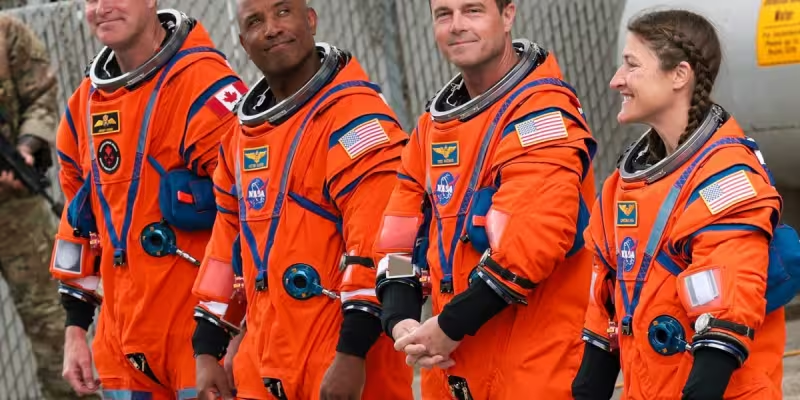
The Artemis II crew has gone farther into space than any humans before them, looping around the far side of the moon and heading home after a mission that pushed Reid Wiseman, Victor Glover, Christina Koch and Jeremy Hansen into history. They will not come back with a performance bonus, overtime or hazard pay.
For the U.S. astronauts on that flight, the answer to how much do astronauts get paid is less dramatic than the trip itself: their government salary tops out around $152,000. Canadian astronaut pay follows a similar sliding scale. A NASA spokesperson told Fortune last year that astronauts receive transportation, lodging and meals while traveling for work, plus about $5 a day for incidentals.
That ordinary pay structure matters now because NASA is still recruiting for the next wave of flights. Last September, the agency picked 10 candidates from more than 8,000 applicants for its class of 2025, a selection rate of about 0.125%. Those candidates are joining a pipeline that is meant to feed Artemis III next year and Artemis IV in 2028, when NASA wants to send astronauts back to the moon’s surface.

Read Also: Artemis Photos show Earthset, eclipse and moon’s far side in rare flyby
The gap between the romance of the job and the salary is part of the reality of space work. Astronaut compensation is treated as standard government pay rather than special mission pay, even as the work itself grows more ambitious. The comparison is close to other technical careers too: aerospace engineers earn about $135,000, according to the U.S. Bureau of Labor Statistics, which puts astronaut pay in the range of a highly trained civilian profession, not a one-time expedition windfall.
Read Also: John P Murtha Ship heat shield clears final NASA confidence test before lunar return
That still leaves a tension in the way the next era of space work is being sold. Executives and technologists have talked about orbital data centers, lunar cities and missions that could one day become routine, but the schedule is unsettled. NASA’s average launch delay for major projects is 12 months, a reminder that even the most carefully planned flight programs slip. The crew that just returned can now say they reached a place no human has been, but the next astronauts are still signing up for a job that pays like a government career while the future of living and working off Earth remains uncertain.