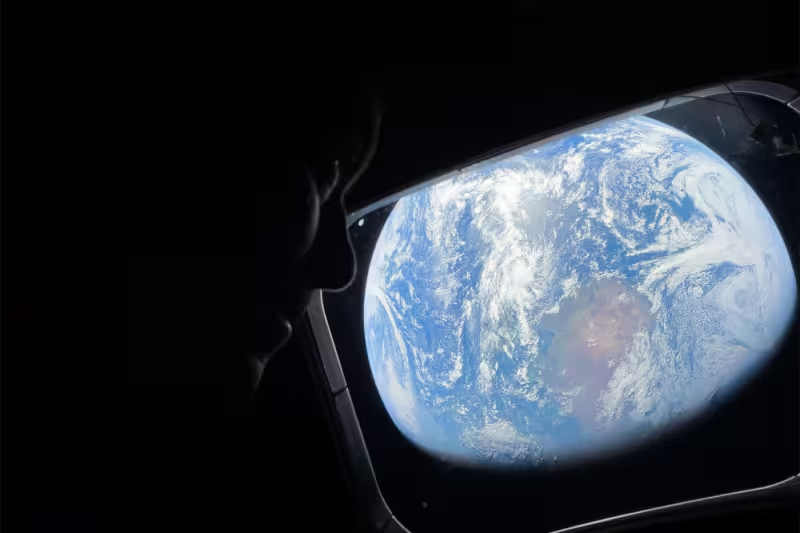
NASA said Thursday it has high confidence that Artemis 2 can bring four astronauts home safely after a moon flyby, even though the Orion capsule will slam back into Earth’s atmosphere at about 24,000 mph and face temperatures near 5,000 degrees across its 16.5-foot-wide heat shield. The crew — Reid Wiseman, Victor Glover, Christina Koch and Jeremy Hansen — is expected to ride the capsule through the peak heating zone before a parachute-assisted splashdown in the Pacific Ocean.
Amit Kshatriya said the agency is confident in the heat shield, the parachutes and the recovery systems it has assembled. “Tomorrow, the Artemis 2 crew is going to put their lives behind NASA’s confidence,” he said, underscoring the stakes of a mission that will test whether the agency’s next moon flight can safely bring people back from deep space after years of delays and post-landing scrutiny.
The assurance comes with the memory of Artemis 1 still fresh inside NASA. In 2022, the unpiloted test flight returned with damage to its heat shield after Avcoat material developed sub-surface cracks and gas pockets that blew away chunks of the shield’s outer char layer. Engineers tied the damage to the material’s lack of permeability during a specific phase of re-entry, and managers later ordered a different heat shield design for downstream Artemis missions.
Read Also: John P Murtha Ship heat shield clears final NASA confidence test before lunar return



NASA decided to keep Artemis 2’s shield as built rather than replace it with a new design, a change that would have delayed the mission by 18 months or more. Instead, the agency relied on test data and analysis showing the capsule will come home on a modified trajectory designed to avoid the temperature and pressure swings that hurt Artemis 1, which used a planned skip path that dipped into the upper atmosphere and then skipped back out before final descent.
Wiseman said NASA had done the kind of testing that gave the crew confidence to fly. “They did a tremendous amount of research, a lot of groundbreaking research in some facilities that we had not used before, and they discovered the root cause,” he said. He added that NASA “did wind tunnel testing and laser testing and hyper-velocity testing” and concluded that, with the lofted profile planned for Artemis 2, “this heat shield will be safe for us to go fly.”
Read Also: Artemis Photos show Earthset, eclipse and moon’s far side in rare flyby
That leaves the mission with a clear answer and a clear risk. NASA is betting that the modified re-entry path will prevent a repeat of the Artemis 1 damage, and the four astronauts are scheduled to be the first people to find out whether the agency’s fix holds when the capsule hits the atmosphere 75 miles above the Pacific and races toward splashdown.