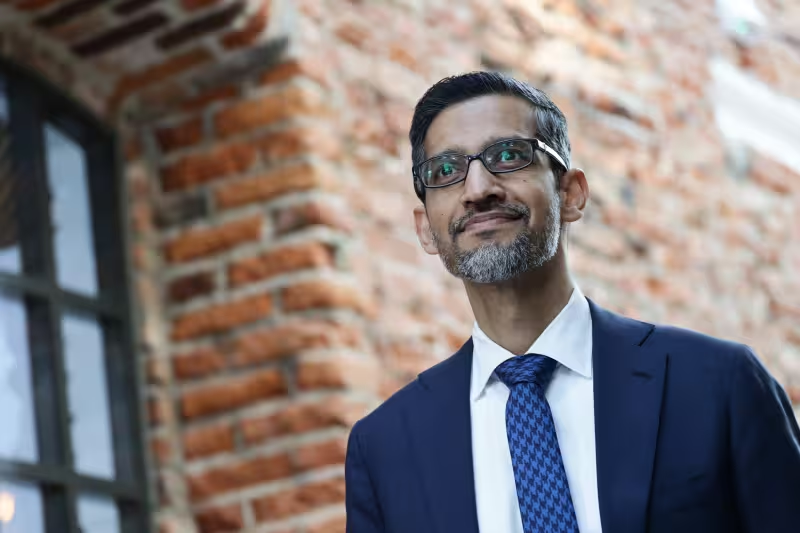
Sundar Pichai says the A.I. boom is giving Google more places to put money to work, and he wants the company to keep leaning in. In an April 7 interview with Stripe co-founder John Collison and investor Elad Gil, Pichai said the shift is creating “more opportunities” for Google to deploy capital in a good way and that the company will keep pursuing early-stage tech bets with long-term potential.
That view is backed by numbers that now run into the billions. Google participated in funding rounds totaling $21.6 billion in 2025, the highest level since 2021, with nearly half of that activity focused on A.I. ventures including Anthropic and Physical Intelligence. Pichai said Google has to be “good stewards of capital,” but also argued that when the return on invested capital looks strong, the company should push as much as it can into those opportunities.
Google has long used its venture arm, Google Ventures, and its growth unit, CapitalG, to back startups, but the scale of some of its bets has become more visible as those companies move closer to public markets. In 2015, Google invested roughly $900 million in SpaceX, and it still holds an estimated 7 percent stake. identified SpaceX as the private holding that added $8 billion to Alphabet’s quarterly profit in early 2025, a gain equal to a quarter of its net income. SpaceX has confidentially filed to go public as soon as June and was reportedly targeting a record-breaking $1.75 trillion valuation.
Read Also: Googl Stock: Alphabet Insiders Sell as Institutional Buyers Add Shares
Anthropic has become the other major example of Google’s capital strategy in the A.I. era. Google first invested $2 billion in the company in 2023 and owns about 14 percent of it. Anthropic’s worth surged to $380 billion earlier this year, and it is reportedly exploring an IPO in the fourth quarter of this year. Together, the two stakes show why Google’s balance-sheet bets are drawing closer scrutiny: the company’s own A.I. products, including Gemini and Vertex, face fierce competition from OpenAI and Microsoft, while its outside investments are increasingly shaping how investors think about Alphabet’s future earnings power.
The tension is that the same A.I. race pushing Google to spend more is also making its capital strategy look more valuable. Pichai’s message in April was not that the company is done making early-stage bets, but the opposite: as long as the opportunity looks durable, Google intends to keep writing checks. The next test is whether those investments keep turning into public-market wins at the same pace as the private valuations behind them.