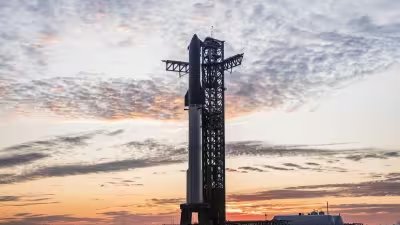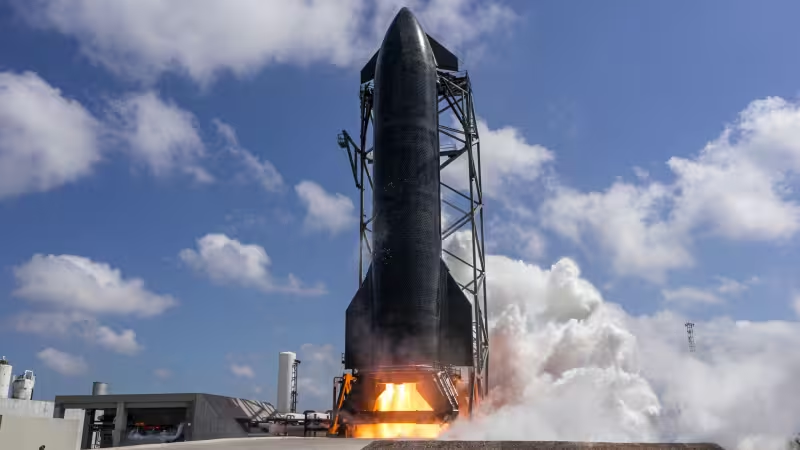
Elon Musk posted a cinematic video on Sunday showing SpaceX's Super Heavy booster being caught midair by the launch tower's giant mechanical arms, and the 22-second clip drew more than 51 million views on X within hours. The footage shows the 232-foot-tall, roughly 250-ton booster descending over Starbase in South Texas as its stainless-steel skin gleams, its Raptor engines throttle down in sequence and faint flames lick the base before the vehicle aligns between the tower's chopsticks.
The arms then close with mechanical precision and secure the booster seconds after it hovers in place. The video was set to Adele's Skyfall, and Musk later described the engineering behind it in the sort of terms usually reserved for fiction, calling it real magic.


The clip was a photorealistic 3D render created by digital artist Ryan Hansen Space, who said it was made without AI. That distinction matters because the maneuver itself is very real. SpaceX first demonstrated the tower catch in October 2024 during Starship's fifth integrated flight test, and the company has repeated it since then, including with upgraded hardware featuring the latest Raptor 3 engines by April 2026.
Starship is the biggest gamble in SpaceX's push to make its giant rocket fully reusable. The Super Heavy booster is designed to return directly to the 400-foot-tall tower that launched it minutes earlier, rather than land on legs or touch down on a pad like Falcon 9 boosters. A successful catch means the booster can be refueled, refurbished and relaunched in days rather than months. The system is powered by 33 Raptor engines generating more than 16 million pounds of thrust at liftoff, and Musk once put the odds of catching it at 80% to 90% in the first year it was tried.
That first attempt worked on the initial try in 2024, and the repeated catches since then show SpaceX has moved beyond a stunt and into routine hardware recovery. NASA has selected Starship as the lunar lander for Artemis III and IV, which is why every clean catch at Starbase now carries more weight than a viral clip. The unanswered question is no longer whether the tower can grab the booster. It is how quickly SpaceX can turn that recovery into a system that flies, lands and flies again on schedule.