
The Toronto Maple Leafs walked into UBS Arena on Thursday, April 9, trying to put a 4-0 home loss behind them while facing a New York Islanders team that had spent the week trying to stop its slide. Toronto was on the second leg of a back-to-back, and the setup could hardly have been tougher against a club that had lost four straight and fallen out of a postseason position.
That was the backdrop for the maple leafs vs islanders matchup, and the numbers made the case for caution. As Neil Parker put it, it was a horrible schedule spot for Toronto after Wednesday’s shutout defeat because the Islanders had been sitting on a four-game losing streak since Saturday. New York also had Ilya Sorokin in goal, with the star netminder second in goals saved above expected for the season, a clear reason the Leafs could not expect many easy looks.


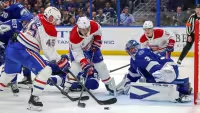
Toronto needed more from its top attackers, especially William Nylander, who was held to one shot on Wednesday even after taking five attempts. Since the NHL Trade Deadline, Nylander had been pacing the Maple Leafs in shots per 60 minutes, but that edge mattered only if he could turn volume into chances against Sorokin. Matthew Knies was another player to watch, after taking two shots in consecutive games while averaging 18:50 of ice time with 3:16 on the power play.
The Islanders, for their part, had been vulnerable away from the puck during the losing streak, allowing 31.5 shots per game, but they had been tougher to beat at home than their recent record suggested. New York had won 16 of its last 25 home games, a run that returned plus 5.60 units and a 19% ROI in the betting frame used around the game. The Islanders had also changed coaches before the matchup, a move that underscored how badly the skid had shaken the organization.
With Toronto short on rest and New York desperate to stabilize after slipping out of a playoff spot, the game came down to a simple question: whether the Leafs could find enough offense against Sorokin to survive a bad schedule spot, or whether the Islanders’ recent home strength would finally show up when they needed it most.