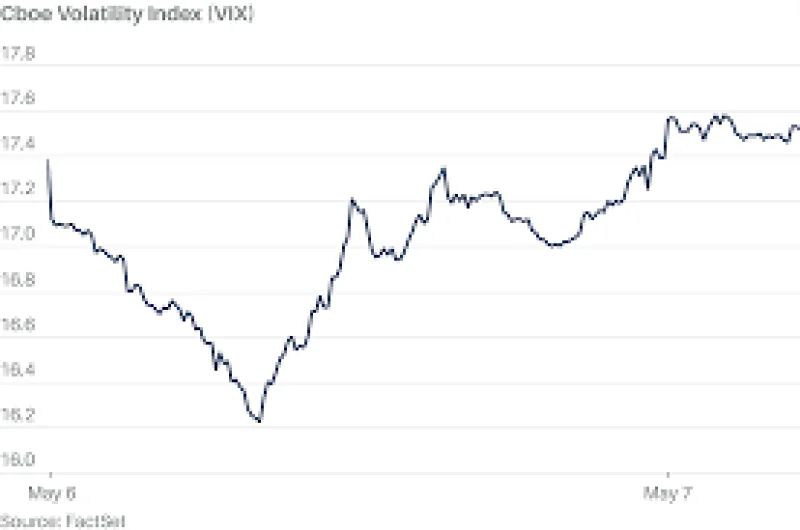
The Vix slipped about 1.2% on Thursday morning to hover just above 17, pulling back from the March 27 peak of 31.05 and leaving the gauge squarely inside its normal 15 to 20 band. The move came as Treasury yields drifted lower, crude prices split directions and investors kept buying dips even as some companies delivered tougher outlooks.
The calm in options markets sat beside a messier picture in corporate America. McDonald's said earnings were $2.83 a share on $6.52 billion in revenue, with U.S. comparable sales up 4%, while Whirlpool cut its full-year ongoing EPS guidance to $3.00 to $3.50 and suspended its dividend after citing a recession-level industry decline. Shake Shack also missed expectations, reporting revenue of $366.7 million against a $372.3 million estimate.

Bond traders were also signaling a little more ease. The 10-year U.S. Treasury yield slipped more than 2 basis points to 4.33%, the 2-year yield fell to 3.849% and the 30-year bond yield edged lower to 4.926%. In energy, Brent crude futures for July dropped 1.85% to $99.40 a barrel, while U.S. WTI futures for June rose 1.85% to $93.21 per barrel, a split move that underscored how quickly traders were repricing geopolitical risk tied to the war in Iran and possible Strait of Hormuz disruptions.
The tension is that the market’s calm is not being matched everywhere else. University of Michigan consumer sentiment came in at 53.3, well into recessionary territory, and Citi U.S. equity strategist Scott Chronert said how long the standoff persists will carry real consequences for the broader economy. That leaves investors balancing a volatility gauge that has fallen 28% over the past month against warnings from consumers, capital goods companies and retailers that demand is under strain.
Shell added to the more cautious tone by trimming its buyback pace to $3 billion even after reporting adjusted earnings of $6.92 billion. Chris Kempczinski, speaking as McDonald's reported its quarter, said conditions in the consumer environment are “certainly not improving, and it may be getting a little bit worse.” For now, the Vix says traders are not panicking. The next test is whether the weaker consumer data and softer guidance start to drag that calm into the rest of the market.