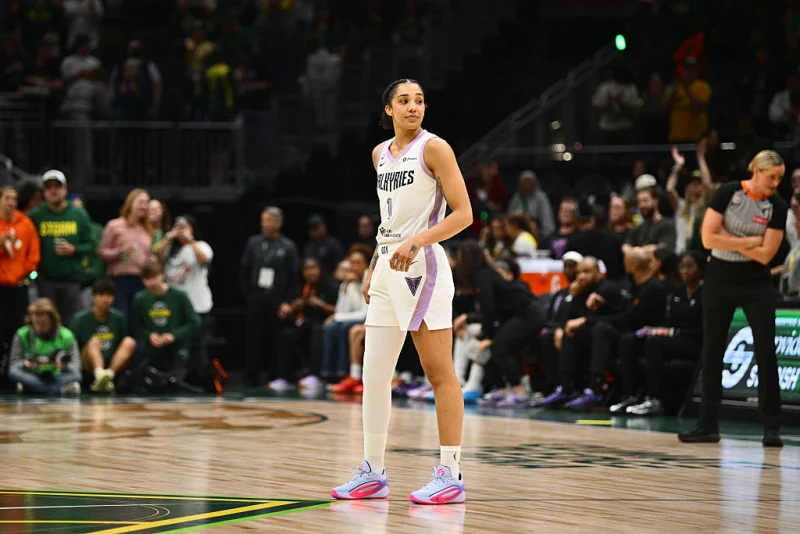
Gabby Williams will make her Golden State Valkyries debut Friday in Seattle, stepping onto a roster that now carries the league’s newest and most expensive label: the first women’s sports franchise with a $1 billion valuation. Williams will also become the first $1 million-a-year player for the Valkyries, a milestone that lands as the team prepares to tip off its second season at Chase Center at Sunday’s home opener.
For Williams, the move is more than a payday. She spent much of her childhood playing for the Bay Area Bulldawgs AAU team out of Mission Rec, and she said, “Knowing what women’s basketball means to the Bay Area and what it has meant here for decades, I know up close and personal exactly what it means to be a female athlete here.” The fit gives Golden State a player with deep local ties just as the franchise tries to turn its rapid rise into something lasting.



The Bay Area’s current boom in women’s sports did not start with the Valkyries. It has been built over decades, from the San Jose Lasers, which Joe Lacob founded in 1996 in the American Basketball League, to the San Jose CyberRays, a founding member of the Women’s United Soccer Association four years before the WNBA’s inaugural season. Bay FC joined the NWSL in 2024, and the Valkyries followed in 2025, adding another major professional team to a region that has steadily become a destination for women’s sports.
That history matters because the region has seen this arc before: Brandi Chastain, a San Jose native and Santa Clara star, became an icon during the 1999 World Cup and was the star of the CyberRays when they won the league’s first championship in a penalty shootout against the Atlanta Beat. Chastain has said, “I’m so proud every time I walk in there,” referring to the building that now houses the Bay Area’s newest women’s teams, and she added, “I have to remind some of these new players that this was our home when women’s professional soccer began here in San Jose, and it looked nothing like this.”
The tension is in whether the money and momentum can hold the same meaning as the history. Bay FC is scheduled to move in 2027 to a custom-built 8.5-acre high-performance training campus on Treasure Island, a sign that the market’s growth is no longer just about fan enthusiasm. It is about infrastructure, investment and a region that is trying to make sure the next generation of women’s sports does not have to begin in borrowed space the way so many of its predecessors did.