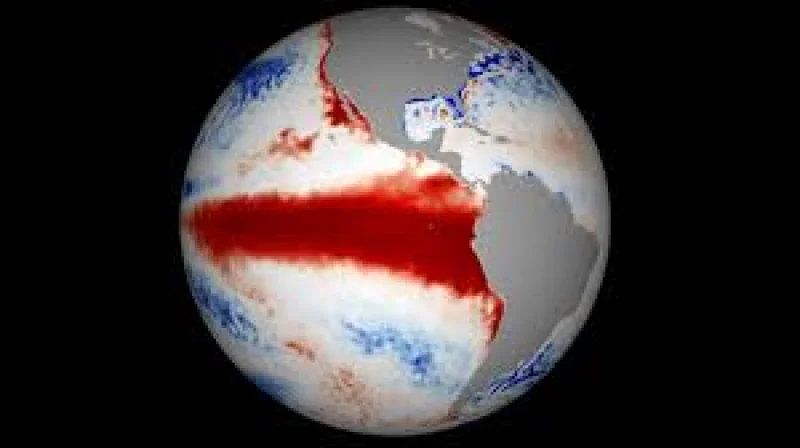
Forecasters are warning that a powerful El Nino may be taking shape, with seasonal models now pointing to a climate pattern that could become the strongest on record. The World Meteorological Organization said an El Nino event is expected to develop from the middle of this year, and that it could alter temperature and rainfall patterns around the world.
The latest Global Seasonal Climate Update from the U.N. weather agency showed sea-surface temperatures rising rapidly, while heat below the ocean surface in the Pacific moves east and begins rising from deep water. On Friday, Wilfran Moufouma Okia said there is high confidence in the onset of El Nino and further intensification in the months ahead.
That matters because El Nino is a natural warming of patches of the equatorial Pacific that can reshape weather far beyond the ocean itself. It typically returns every two to seven years and lasts about nine to 12 months. The strongest episodes are known as super El Ninos, and some scientists say the current setup is starting to look unusually potent.
Daniel Swain said the volume and intensity of the subsurface warm water anomalies are about as large as he has seen in the historical record. He said one of the key building blocks needed to fully materialize is now occurring, but added that nothing is guaranteed and that it is still not certain whether the event will become a super El Nino.
Jeff Berardelli was blunter about what that could mean on the ground. He said stronger heat waves, worsening drought in some areas and more intense floods could follow if the Pacific releases a large amount of heat. He also said El Nino tends to subdue the Atlantic hurricane season, and that the Caribbean will be extra dry this summer and likely see fewer tropical systems.
The caution in the forecast is that spring predictions are harder to make accurately, which is why the World Meteorological Organization is treating the outlook as strong but not finished. Still, the agency’s message is clear: the world should be preparing now for a midyear El Nino that could steer weather patterns in a way many people have not experienced before.
The unanswered question is not whether El Nino is forming, but how far it will go before the Pacific stops feeding it.