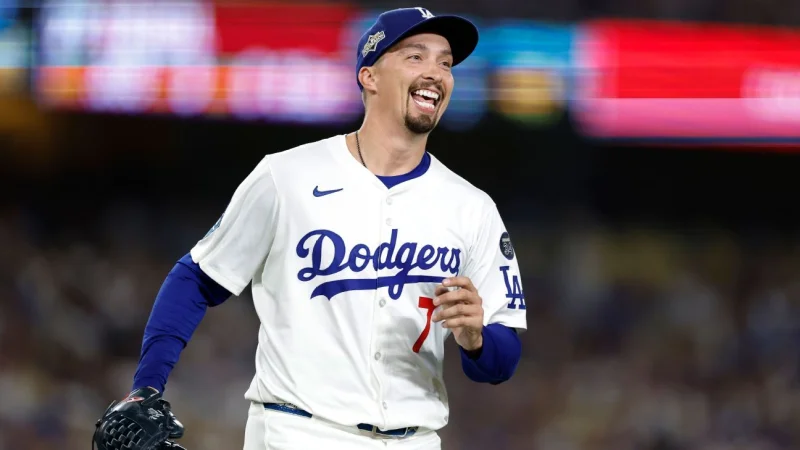
The Dodgers activated Blake Snell on May 9, 2026, and sent him to the mound against Atlanta for his season debut. He had been on the 15-day injured list with shoulder fatigue and returned after a rehab assignment that got him to four innings in his last outing.
The move landed earlier than the plan laid out two days before, when the expectation was that Snell would make one more rehab outing on Saturday. Dodgers officials had repeatedly said they preferred Snell to build up to more than five innings before he was reinstated, but the left-hander was back in the majors before reaching that mark.
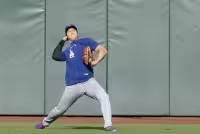

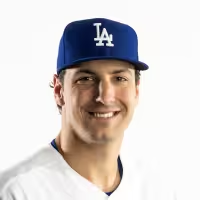
Snell’s return also pushed Brock Stewart back to the injured list with a bone spur in his foot. Stewart had opened the season on the injured list while recovering from shoulder surgery and had made just two appearances with the big-league club before this latest setback.
The timing matters because the Dodgers were already managing a six-man rotation that included Tyler Glasnow, Shohei Ohtani, Yoshinobu Yamamoto, Emmet Sheehan, Justin Wrobleski and Roki Sasaki. Glasnow had left his most recent start with a back spasm, and it was not confirmed whether he would go on the injured list or simply skip a turn, a detail that kept the rotation picture unsettled even as Snell returned.
That uncertainty is what made the decision notable. Snell had not yet pitched in the majors in 2026 before the activation, so the Dodgers were adding a high-profile starter back into the mix while still sorting out how much depth they had behind him. Sasaki was carrying a 5.97 ERA, Sheehan a 5.23 ERA, and Wrobleski a 1.25 ERA, though Wrobleski’s numbers came with a 10.7% strikeout rate, a.222 batting average on balls in play and an 86.5% strand rate. As Snell rejoined the group, the Dodgers were betting his return would steady things, even if the path back had not unfolded exactly as planned.