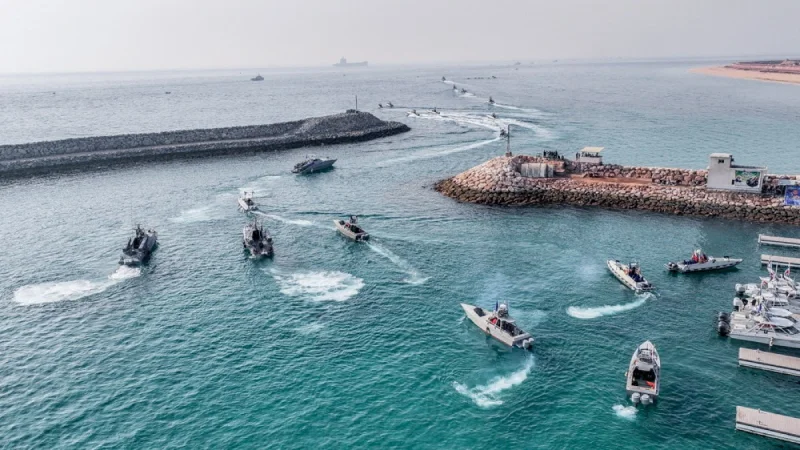
Iran said on Friday that its navy had seized the Ocean Koi in the Gulf of Oman after what it described as a special operation targeting a vessel that had tried to disrupt oil exports and the interests of the Iranian nation. State-owned Press TV aired video showing Iranian forces boarding and detaining the ship.
The tanker, which MarineTraffic lists as registered in Barbados, was caught up in a new burst of maritime pressure that came just hours after the United States and Iran traded fire in the Strait of Hormuz. The timing sharpened fears that a fragile pause in fighting could be undone by events at sea even as both sides were still talking about a longer truce.
Iran’s Islamic Revolutionary Guard Corps said the seizure of Ocean Koi was part of a move to stop what it called interference with Iranian oil exports. On the other side of the standoff, US Central Command said the military had disabled two Iranian-flagged tankers as they attempted to access Iranian ports in the Gulf of Oman. Admiral Bradley Cooper said US forces in the Middle East remain committed to full enforcement of the blockade of vessels entering or leaving Iran.

The exchange on the water came after a separate, sharp round of claims and counterclaims over the Strait of Hormuz. Iran’s top joint military command accused the United States of breaking the ceasefire by targeting an Iranian oil tanker and another ship. It said 10 sailors were wounded and five more were missing, and added that US air attacks hit civilian areas on Qeshm Island. The command said it responded by striking US military vessels east of the Strait of Hormuz and south of the port of Chabahar.
President Donald Trump brushed off that exchange as a “love tap” and denied it amounted to a breach of the current pause in fighting. That denial sat uneasily beside the latest maritime seizures, which showed how quickly a limited lull can be overwhelmed by force and retaliation in the same narrow corridor of water.
Diplomatic efforts were continuing even as the fighting and seizures mounted. Marco Rubio said on Friday that the administration was still expecting a response from Iran on its latest proposal for a more lasting end to the war. JD Vance met in Washington with Qatari Prime Minister and Foreign Minister Sheikh Mohammed bin Abdulrahman Al Thani, and Qatar’s foreign ministry said the two discussed Pakistan-led mediation efforts aimed at de-escalating the conflict. Esmaeil Baghaei said Tehran was still reviewing the proposal and considering a response.
Baghaei also condemned the latest attacks and said Iran’s forces were closely monitoring the situation and fully ready to respond to any aggression and adventurism. For now, the seizure of Ocean Koi answers one immediate question: the Gulf remains a live front in a conflict that neither side has truly stepped back from, even while negotiators try to build a ceasefire that can hold.