Time Difference Between US States
When someone says “I’m three hours behind you,” they are usually describing the difference between Pacific Time and Eastern Time. But once you include Central and Mountain (and DST weeks), the math can get confusing.
This guide gives quick, real-world examples for popular state-to-state comparisons and a simple method you can reuse.
The easiest method
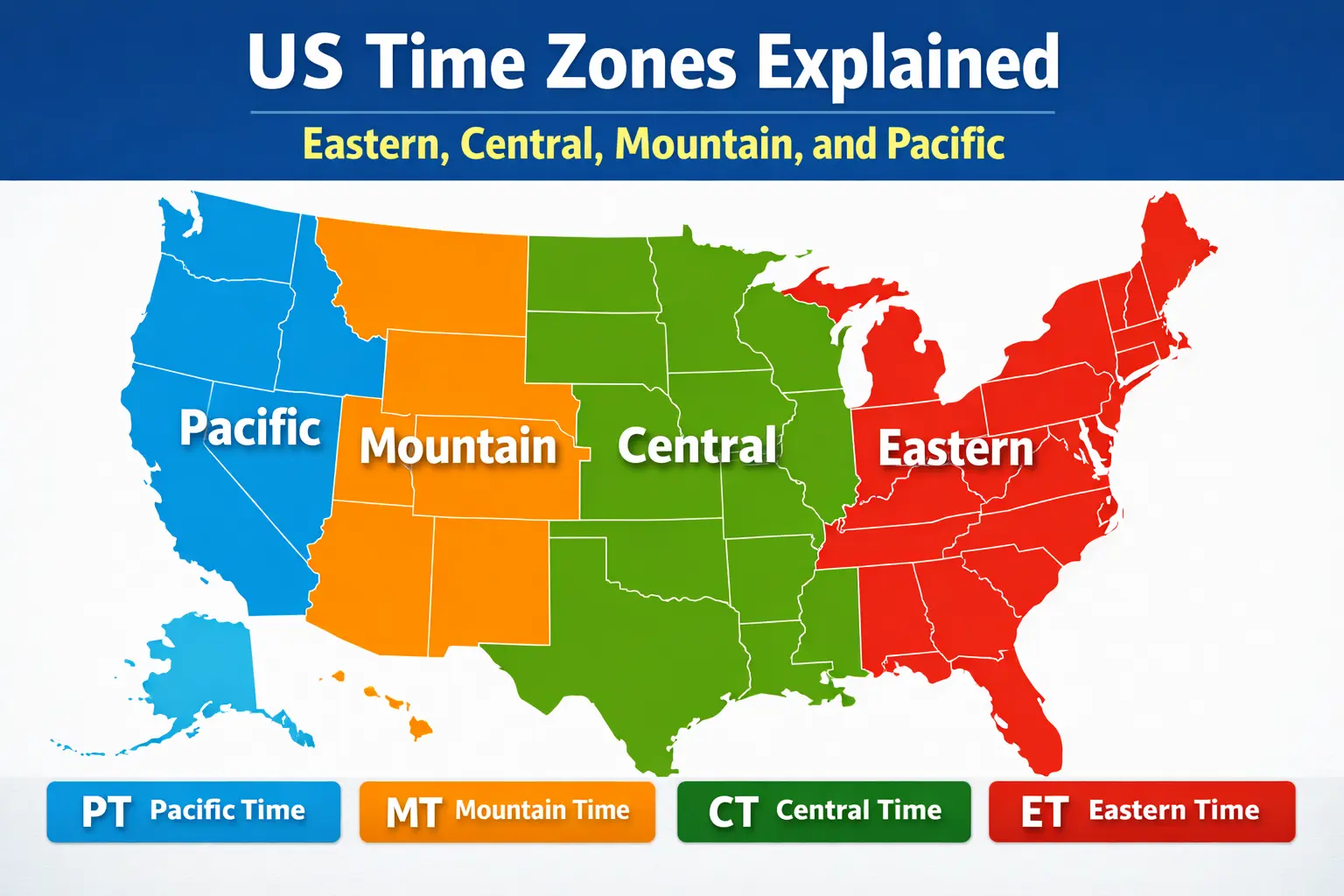
- Identify each state’s time zone (ET, CT, MT, PT).
- Count how many zones apart they are.
- Move the time forward when traveling east and backward when traveling west.
If you’re not sure about a state’s zone, you can open its page on USinTimes and see the live clock.
Common examples
New York vs California
New York is typically 3 hours ahead of California.
- 9:00 AM in New York = 6:00 AM in California
- 5:00 PM in California = 8:00 PM in New York
Florida vs Texas
Most of Florida is Eastern Time, while most of Texas is Central Time. That means Florida is usually 1 hour ahead of Texas.
- 2:00 PM in Florida = 1:00 PM in Texas
Illinois vs Colorado
Illinois is Central and Colorado is Mountain, so Illinois is usually 1 hour ahead.
- 10:00 AM in Illinois = 9:00 AM in Colorado
Washington vs Nevada
Both states are commonly in Pacific Time, so the difference is usually 0 hours.
- 7:30 PM in Washington = 7:30 PM in Nevada
Watch out for these situations
- Split time zones inside one state: some states span two time zones depending on the region.
- DST transition weeks: if one place switches earlier (or doesn’t switch), the difference can change temporarily.
- International callers: if a friend is calling from outside the US, always specify a time zone (for example, “ET”).
A quick checklist before you schedule
- Use the state pages to confirm the live time:
- California time
- Texas time
- New York time
- Add both times in the message or invite.
- If the call is important, send a reminder 15–30 minutes before.