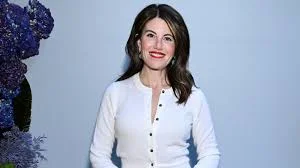
Monica Lewinsky said wanting to feel special and validated helped lead her into trouble in her early 20s, revisiting the mindset she says fueled bad decisions during one of Washington’s most notorious scandals.
Speaking on her podcast, Reclaiming with Monica Lewinsky, in an episode titled Laura Day on Reclaiming Intuition & Turning Trauma into a Superpower, Lewinsky said that search for specialness and approval was part of what got her into trouble. “I think in some ways that's part of what got me in a lot of trouble in my early 20s of looking for and wanting to be special and feeling that feeling of specialness, of validation,” she said. “And when it came, I fell into that, making bad decisions a lot of times, not just in D.C., but a lot of different ways.”


Lewinsky was 22 when she was a White House intern and her affair with then-President Bill Clinton became public in the late 1990s. The revelation triggered impeachment proceedings against Clinton in December 1998, turning Lewinsky into a figure at the center of a national and global scandal that has followed her for more than 25 years.
In the podcast conversation, which was framed around crisis as a catalyst for growth, Lewinsky also returned to how the frenzy felt at the time. She described it as a kind of “public burning,” saying late-night jokes, relentless media saturation and constant scrutiny reduced her identity to a punchline on a global stage.
The remarks revisit a chapter that remains embedded in the political history of the Clinton era, and they land now as Lewinsky continues to reinterpret her experience in public rather than letting others define it for her. Digital said it reached out to Lewinsky for comment. The broader episode also referenced testimony from Bill and Hillary Clinton during a House Oversight Committee hearing on Jeffrey Epstein.