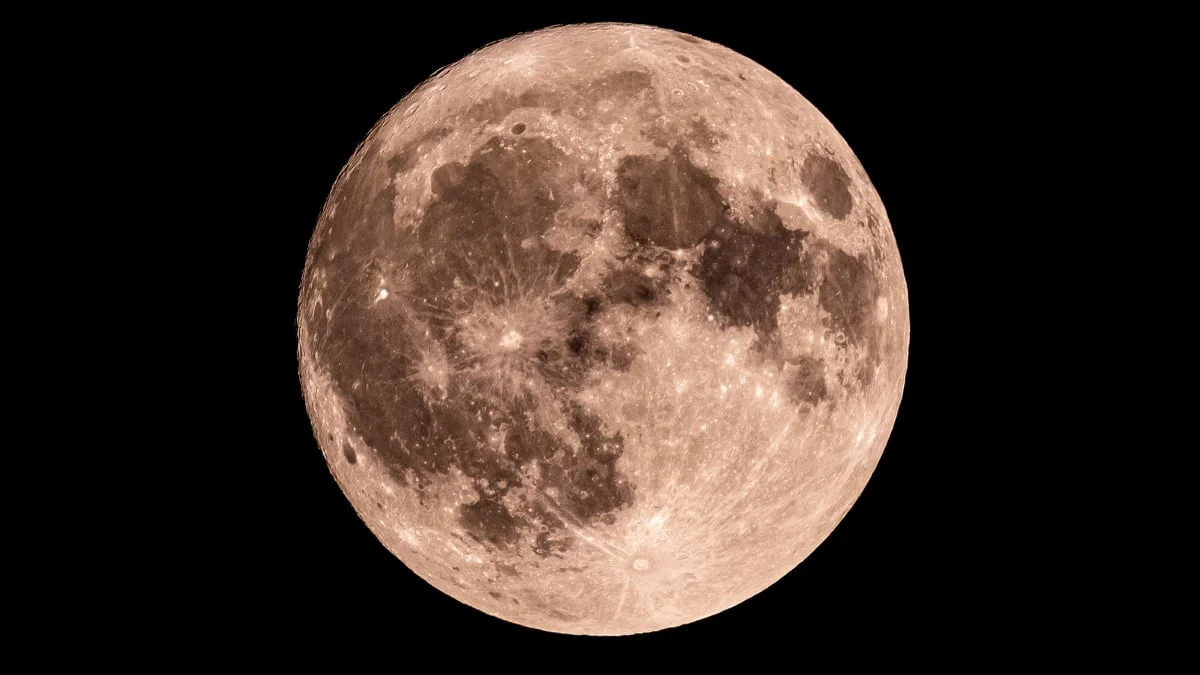
The Moon phase for Thursday, April 30, 2026, is Waxing Gibbous, and it is almost full. NASA’s Daily Moon Guide says 98% of the Moon will be lit tonight, with the Full Moon predicted for May 1, 2026.
For skywatchers, that means the lunar face should be bright enough to reveal Mare Serenitatis, Tycho Crater and Copernicus Crater without any visual aids. Binoculars should bring the Alps Mountains, Archimedes Crater and Alphonsus Crater into view, while a telescope may show the Apollo 16 landing spot, Rima Hyginus and the Fra Mauro Highlands.

This is day 13 of the lunar cycle, a point that sits just before the Moon reaches full illumination. NASA says the Moon takes roughly 29.5 days to circle Earth once and moves through eight distinct phases along the way, beginning with New Moon, when the side facing us is dark because the Moon sits between Earth and the sun. From there, the light grows through Waxing Crescent, First Quarter and Waxing Gibbous, before the whole face becomes visible at Full Moon. The cycle then reverses through Waning Gibbous, Third Quarter or Last Quarter, and Waning Crescent.
The phase names describe what observers see from the Northern Hemisphere: a small sliver of light on the right during Waxing Crescent, half the Moon lit on the right at First Quarter, and more than half illuminated but not yet full during Waxing Gibbous. After the peak, the right side begins to dim again in Waning Gibbous, another half-Moon appears with the left side lit at Third Quarter, and only a thin sliver remains on the left during Waning Crescent before the Moon turns dark again.
The timing leaves little mystery about what comes next. If the forecast holds, tonight is the last full night to watch a nearly complete lunar disk before the Moon crosses into Full Moon on May 1, 2026, closing out the Waxing Gibbous stage that has brought it this close to maximum light.