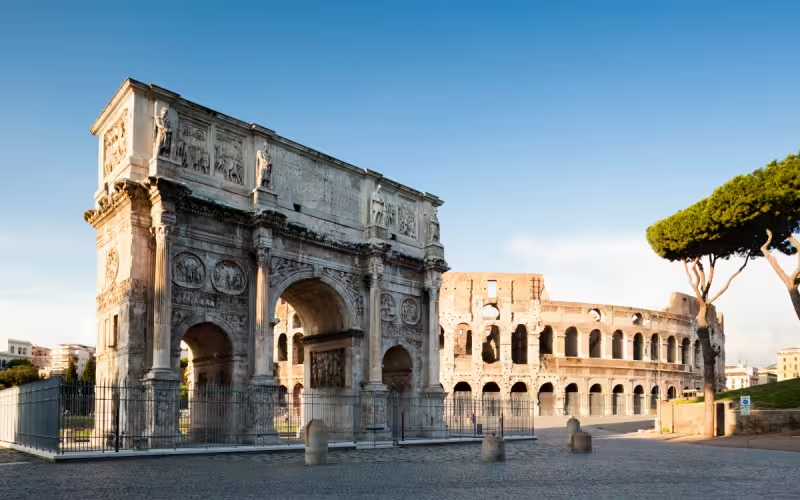
ROME — I first knew Rome in the 1970s, when I visited my wife’s uncle, a priest at the Congregation for the Doctrine of the Faith. The city was already ancient beyond belief, with almost 2,800 years of antiquity behind it, and yet it still felt alive in a way that only Rome can. One night I saw Aida at the Baths of Caracalla, and the ride home through Roman traffic was terrifying.
I have gone back many times since, and the city has never stopped seeming like a place where sacral and profane life press hard against each other. As a child, I was alive to remember the recorded voice of Pius XII, and later I watched the years from John XXIII to Benedict XVI as a stretch when evangelical zeal, pastoral service and a brilliant intellect seemed to coincide and reinforce one another. In those years, Rome’s Catholic soul still seemed able to push back against the vulgarity and pornographic graffiti that marked so much of the city’s surface.
That memory matters now because Pope Francis died one year before this was written, and his absence has left the Church with a set of internal conflicts it still has not resolved. Francis was a defender of the poor, and his pontificate had real strengths, but it also ended without settling the battles inside the Church that had been building for years. The author says he visited Rome twice in the last years of Francis’ pontificate, and those trips left him with the sense that the city and the Church were both carrying more strain than they showed in public.
He even compares the Roman Church at times to Constantinople in the last years of the Paleologan emperors, a comparison that carries its own warning. Easter is meant to be a time of celebration and renewed hope, but the hope has to live alongside the fact that the conflicts Francis left behind remain open. Rome, for all its age and grandeur, is still the place where that unfinished struggle is easiest to see.