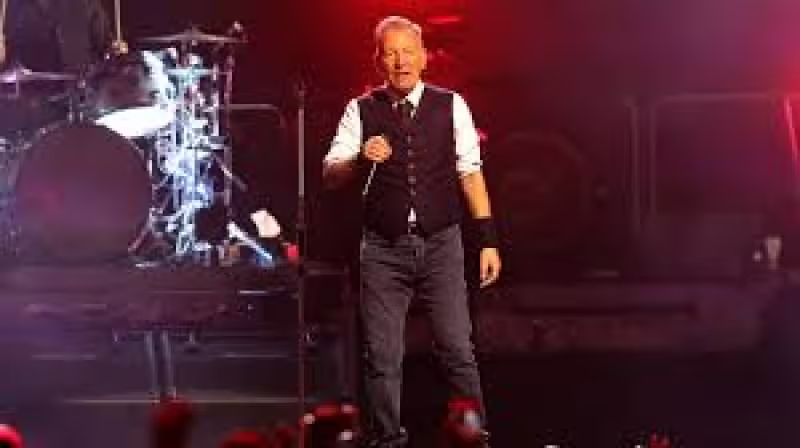
Bruce Springsteen opened his show in Austin, Texas, on Sunday night with a prayer for U.S. service members overseas and then turned to the shooting that had shaken Washington a day earlier, saying he was thankful President Donald Trump, anyone in the administration and anyone in the audience had not been injured. Speaking to the crowd at the Moody Center during the E Street Band’s stop on its tour, Springsteen said there is no place in the United States for political violence of any kind.
The remarks came after Saturday night’s shooting at the White House Correspondents’ Association Dinner, where authorities said the suspected gunman, identified as 31-year-old Cole Allen of California, stormed a security checkpoint and opened fire. Trump was rushed from the ballroom at the Washington Hilton Hotel and later praised law enforcement at a White House press conference, saying they had acted incredibly and stopped the suspect at a first line of defense.


Springsteen has spent months criticizing Trump and his administration, and the Austin comments fit squarely within that public stance. He kicked off his Land of Hope and Dreams American Tour in March, and his latest song, Streets of Minneapolis, also takes aim at Trump’s administration and its deployment of thousands of federal agents. But Sunday night’s response was less about politics than restraint. He framed disagreement as something that can be argued in public and fought over peacefully, then drew a hard line at violence.
That distinction matters because investigators were still trying to determine a motive and build a case ahead of an expected arraignment on Monday. Springsteen’s message did not add to the investigation, but it did give voice to the basic reaction the country was already reaching for: relief that the attack did not end in deaths, and insistence that political conflict cannot be allowed to turn into gunfire.
For Trump, the episode added another public test of his security and the country’s mood. For Springsteen, it offered a moment to say that criticism of those in power is part of American life, but violence is not. He left the stage not with a slogan, but with a line that landed plainly: this country can argue hard, but it cannot normalize political violence.