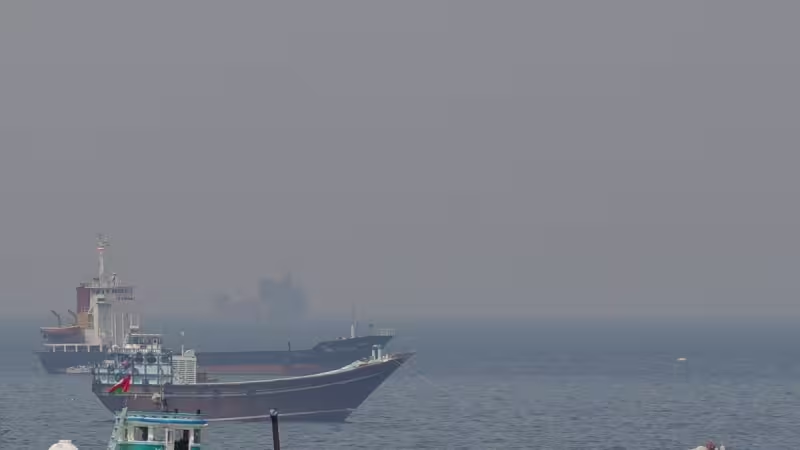
President Donald Trump extended by 90 days a shipping waiver that makes it easier to move oil, fuel and fertiliser around the United States, pushing back a deadline that had been set to expire in three weeks. The White House said Friday the move was meant to give the maritime industry more time to make sure enough vessels were available.
White House spokeswoman Taylor Rogers said the extension offered “certainty and stability for the US and global economies,” and the administration framed the decision as part of a broader push to curb rising energy costs tied to the war with Iran. The waiver had first been announced in March for 60 days.
The change matters because the Jones Act, passed in 1920, requires goods moved between US ports to travel on US-flagged vessels. That rule has long divided Washington. Supporters say it protects a domestic shipping industry and merchant marine that can support military logistics and national security. Critics say it raises costs and constrains capacity when supply chains are tight.



That clash is especially sharp now. The White House move came as fuel prices have become politically sensitive ahead of November’s midterm elections, and the administration is trying to ease pressure without fully reopening the fight over the law itself. A White House official said the extension was meant to allow ample time for the maritime industry to ensure sufficient vessels were available.
Jennifer Carpenter, who responded for the shipping industry, called the move “an affront to hundreds of thousands of hardworking Americans” and said it undercut Trump’s bid to restore American maritime dominance. Her criticism goes to the heart of the fight over the jones act: whether the country should prioritize lower short-term shipping costs or the domestic fleet the law was designed to preserve.
The policy debate has also produced competing estimates. In March, the Center for American Progress said waiving the Jones Act could lower East Coast gas prices by 3 cents, while potentially raising costs on the Gulf Coast. The White House is betting that a temporary extension can soften price pressure without forcing a broader rewrite of the law. That calculus will now run through the next three months, with the administration seeking to keep fuel moving while leaving the larger maritime fight unresolved. For more on the administration’s broader foreign-policy moves, see Steve Witkoff heads to Pakistan as Trump extends Jones Act waiver at