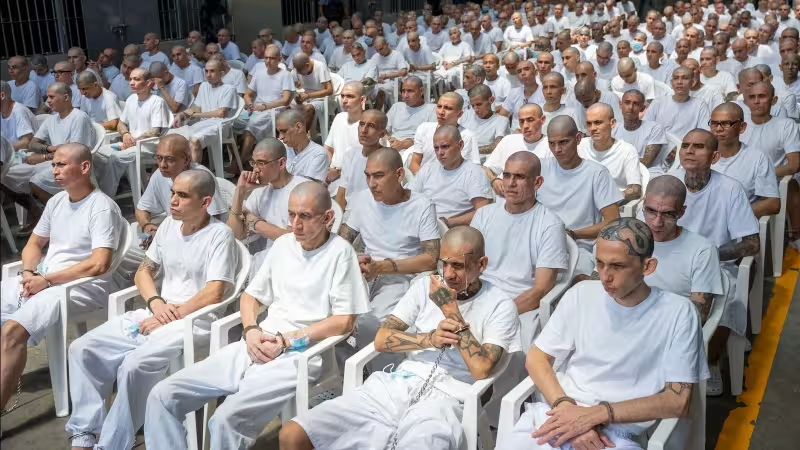
Prosecutors in El Salvador have opened a mass trial of 486 alleged MS-13 members, launching the largest criminal proceeding in the country’s history under the emergency powers that President Nayib Bukele has used to remake the justice system.
The defendants face charges ranging from homicide and extortion to arms trafficking. Authorities say they were involved in more than 47,000 crimes between 2012 and 2022, including about 29,000 homicides, and said they would seek the maximum sentences allowed under Salvadoran law.
The trial is taking place as Bukele’s government keeps El Salvador under a state of emergency that has lasted four years and allowed mass hearings, often held virtually. Prosecutors say they are aiming at the gang’s top leadership and have overwhelming evidence against the accused. The case also comes as a recent legal reform is set to permit life imprisonment without parole for people convicted of terrorism, murder or rape.



That expansion of state power has drawn sharp criticism from human rights groups and a United Nations panel of experts, which warned that mass hearings and virtual trials undermine the right to defence and the presumption of innocence. The same emergency has fueled detentions on an unprecedented scale, with rights organizations estimating that El Salvador’s prison population has climbed to about 118,000 detainees, a level that at one point amounted to 1.9 percent of the country’s population.
The crackdown has also become part of Bukele’s standing with Washington. Donald Trump has called him an “incredible ally,” and his administration designated MS-13 a terrorist organization. Bukele, whom Trump has also described as “humane,” has tied his rule to the promise of crushing the gang that dominated life in El Salvador for years after the civil war ended in 1992 and military rule gave way in 1979.
What happens next now rests on whether the courts turn the government’s sweeping claims into convictions that can withstand scrutiny, or whether the mass proceeding becomes another test of how far El Salvador’s emergency justice can go before the safeguards that normally protect defendants disappear for good. See also Nayib Bukele backs life imprisonment as El Salvador deepens crackdown.