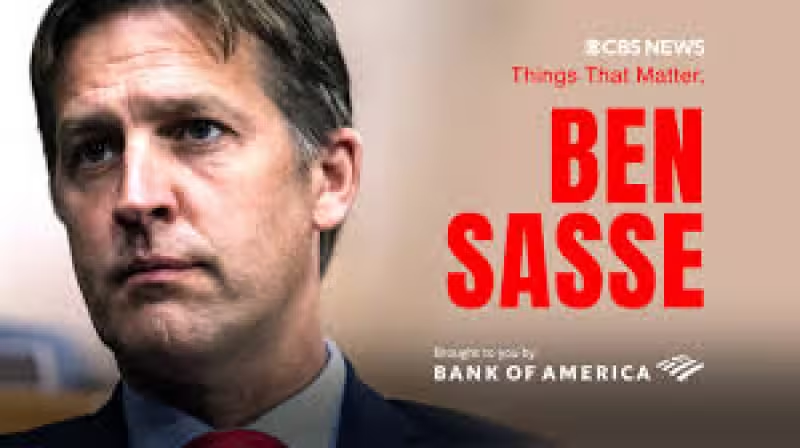
Former Sen. Ben Sasse says he is living on “extended time” after a pancreatic cancer diagnosis late last year gave him three to four months to live. In an interview with Scott Pelley and in a CBS News town hall, Sasse said he wants to spend some of that time talking about “bigger stuff” than the daily grind of politics.
The former Nebraska Republican, who ran for the Senate in 2014 and won reelection after clashing with President Trump, said Washington is trapped in “reductionistic tribalism” and that Congress is not spending enough time on large-scale problems. He called the Senate “very, very unproductive” and said lawmakers are not wrestling with the most fundamental questions facing the country.
Sasse said he owes the extra time on earth to “providence, prayer and a miracle drug,” and argued that more Americans should have access to experimental treatments that may extend lives. He said he spent much of the week in Washington, D.C., while missing time with his wife and three kids in Nebraska, before resigning from Congress two years after winning reelection to become president of the University of Florida.


That career turn left him speaking about the chamber he once served in with the bluntness of someone who no longer needs its approval. He said neither party has very big or good ideas about 2030 or 2050, and accused politicians of being pulled toward narrow niches by social media. He said the House should be much larger, with 2,000 lawmakers instead of 435, and argued the Senate should be more productive and more focused on major questions.
His criticism is tied to a larger warning. Sasse said he suspects the republic will survive in 2040, 2050 or 2060, but “it’s not a 90/10 bet,” because a republic depends on deliberative, long-form discourse, learning, humility and community building. He said he is “optimistic and pessimistic about the complexities of human nature,” and said the AI revolution is “both glorious and horrific at the same time.”
For Sasse, the point is not just that he is confronting mortality, but that he sees the country as running short on the habits that keep a republic intact. He said the Senate needs to be less like Instagram and more deliberative, and his answer to why he is still speaking now is plain: he wants to use the time he was not expected to have to push Americans toward bigger questions before the culture of constant combat does more damage.