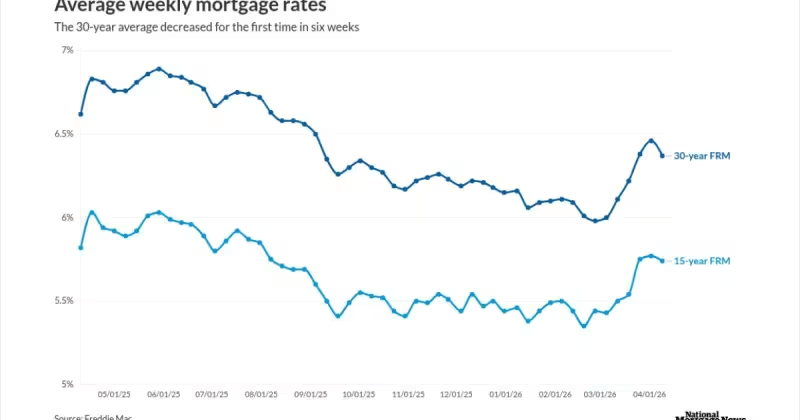
Mortgage rates backed off their 2026 high on Thursday after concerns over an escalation in the Iran war temporarily eased, giving would-be buyers a small break after weeks of strain. Freddie Mac said the average on the 30-year fixed mortgage fell 9 basis points to 6.37% in its April 9 survey, down from 6.46% the previous week.
The 6.46% reading had been the high mark so far this year, and the latest drop was the first decline since the U.S. declared war on Iran in late February. A year ago, the 30-year average stood at 6.62%. The 15-year fixed mortgage average also edged lower, to 5.74% from 5.77% a week earlier, compared with 5.82% a year ago.
Freddie Mac Chief Economist Sam Khater said the retreat in borrowing costs is a positive development for prospective homebuyers and could help produce a more favorable spring homebuying season than last year. The move also came as the 10-year Treasury yield, a key guide for mortgage pricing, opened at 4.29% on Thursday and sat at 4.27% by midday, after closing at 4.31% on April 2 and reaching as high as 4.38% during the prior seven days.



Read Also: Refinance Rates Ease After Mortgage Rates Fall on Iran Ceasefire Relief
Even so, the easing may not last. Bright MLS Chief Economist Lisa Sturtevant said the ceasefire news following President Trump's recent remarks could offer only a brief reprieve for mortgage rates, and said it is too early to call it a turning point for the spring housing season. She said turbulence is likely to continue because the market remains skeptical of a permanent resolution for the Strait of Hormuz, while energy and shipping costs keep inflation figures sticky and make a substantial drop in rates unlikely for the foreseeable future.
The broader housing market has already been showing strain. The Mortgage Bankers Association said application volumes have fallen for four straight weeks, and President and CEO Bob Broeksmit said ongoing economic uncertainty and higher mortgage rates continue to weigh on demand. He said purchase and refinance activity remain subdued, with purchase applications falling on an annual basis for the first time since January 2025.
There are pockets of demand underneath the slowdown. Zillow Home Loans senior economist Kara Ng said March was one of the busiest months for newly pending home sales since late 2022, and said near-term demand may be supported by buyers working against the clock on rate locks secured when mortgage rates were near 6%. That leaves the spring market caught between modest relief and lingering caution, a balance that may decide whether this week’s dip becomes a pause or just another step in a volatile year. Refinance Rates Ease After Mortgage Rates Fall on Iran Ceasefire Relief.